Creative Non-Fiction by Deborah Adams
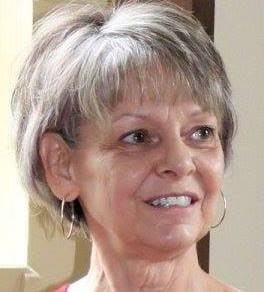
Deborah Z Adams received an Agatha Award nomination for Best First Novel for the debut book in her Jesus Creek mystery series (Ballantine Books, Silver Dagger Books). Her short story “Cast Your Fate to the Wind” won the Macavity Award and earned a second Agatha nomination. Her poetry, creative non-fiction, short stories, and microfiction have appeared in hundreds of journals, including Litmosphere, Susurrus, WELL READ Magazine, Adelaide Literary Review, Sheila-na-gig, Black Moon Magazine, Dead Mule, and a number of others. You're invited to visit her website for more information about the author and her work: Deborah-Adams.com
Danger, Van Halen, and the Purple Wartyback
The airport’s closet-size waiting room is packed. They’re playing Van Halen’s “Jump” on a loop, Eddie’s synth skills ramping up adrenaline. As if I need more of that. As if the schedule board’s brazen prediction—Deborah : Danger—isn’t enough. We nervous adventurers sign waivers, pay our fees, and perch on molded plastic chairs until we’re claimed by our instructors, the well-trained skydive pros who’ll be in charge of our safety.
I didn’t even know we had a skydiving school in our cozy river town until I saw an ad in the local paper announcing a fundraiser to benefit the widow and infant son of a police officer. Deputy B was killed when he stopped to help with what he thought was an ordinary fender bender; the man who’d rammed into his estranged wife’s car shot the Deputy on the spot. A week after the officer’s murder, I presented my final training on domestic violence for a group of social workers who knew and respected Deputy B. It’s my job to teach them how to help their co-workers who might be victims of abuse, but first I have to convince them the threat is real. Domestic violence isn’t a spectator sport; victims often hide what’s happening out of shame or fear and many abusers are masters of deception.
This particular crime is aided and abetted by our human tendency to be oblivious.
After years in this job, I see domestic violence everywhere, but I’m no exception to the rule—I’m just oblivious to other subtle things. For example, I’ve lived beside the river for nearly forty years, but I’ve only recently started to notice the mussel.
Despite their colorful names—Pistolgrip, Heel Splitter, Monkeyface, Pink Mucket—mussels don’t get much notice. They aren’t deliberately secretive or camouflaged or microscopically small.
Mussels are drab, quiet, and slow, living their entire lives in the muck of the river bed, and largely at2 the mercy of currents, water levels, and predators. Like every living thing, mussels abide by certain biological directives: eat, don’t get eaten, reproduce. They live by instinct, never second-guessing their decisions or questioning their life purpose. They’re only concerned with survival. Aren’t we all?
~~~~~~~~~~
My partner, Danger Dan, gives me a no-frills tutorial about the harness that will attach me to him—my back to his front—then rests his hands lightly on my shoulders. “I’ll count to three,” he says, and tips me to the right as he demonstrates. “One [tip], two [tip], three [tip], and then we go.” He shows me how to hold my arms (crossed and tight against my chest during freefall, spread wide like open wings once the parachute deploys), and how to lift my legs when we land. He repeats the instructions every few minutes, and I like that; it means he’s focused on his job. He’s skilled at calming jittery customers.
He has no way of knowing that jumping out of a plane isn’t even on the top ten list of scary things I’ve done, seen, and heard lately.
When we finally make our way onto the plane, we climb in one at a time, and sit on the floor between each others’ legs like neat sardines. Danger has his back to a bulkhead rather than a record machine, I’m in front of him, the next instructor is scooched between my legs, and so on. While the other daredevils chat and joke, I’m quiet, observing them. I like flying, the sudden flip in my stomach as the plane leaves the ground and the easy freedom of passing through clouds. I’m not so fond of handing over control to someone else, and I really abhor being surrounded by strangers who might rise up at any moment and start a revolution in mid-air or hijack the plane or even drop bombs from the windows. Danger asks if I’m okay. I tell him yes, but maybe I’m lying.
The first thing we learn as advocates is that victims go back to their abusers an average of seven times before the relationship ends. J had been in shelter sixteen times; she’d gone back to her abuser seventeen times. The first week that I was on staff, he beat her to death then called 911, devastated by the loss of his woman. All the other advocates knew her, had helped her find employment and housing,3 had met her in emergency rooms and police stations to transport her to our shelter. J’s primary advocate, the woman who’d worked with this client for years, shrugged at the news. “I’m fine,” she said, and declined counseling.
I thought my new colleague was brave and strong, and I wondered if I’d ever match her level of calm. Today, after twelve years as a hotline volunteer and seven as a staff advocate, I’m jumping out of a plane. Burn out, secondary trauma, compassion fatigue—call it whatever you like—is just another way of saying that I’ve grown a hard shell to protect myself.
The female mussel holds fertilized eggs until they develop into larvae–glochidia–and then she waits.
Waits. Waits. In order to spread her progeny as far as possible and to give them the best chance of survival, Mama Mussel has to spew them out and onto a passing fish, which will serve as an incubator for the glochidia. First, though, Mama Mussel must attract a fish, and to do that, she uses bait—a bit of extruded tissue that looks and moves just like a minnow, a crawdad, or a worm. When Mama senses a potential host is nearby, she shoots her glochidia into the water so they can attach to the fins or gills of the passing fish. A wise fish might wonder why its next meal is beckoning from just one spot instead of swimming away. We’re all capable of extreme gullibility under the right circumstances.
~~~~~~~~~~
We reach altitude, someone opens the cargo door, and teams form a line. Danger and I stand up together and wait while the others take turns disappearing into the slightly overcast sky. My body freezes in rebellion for an instant when I notice that the burly guy ahead of me is in a near-faint and being supported largely by his instructor. That first step is a doozy. I could back out now, but my brain reminds me there are only two ways to return to the ground. Ego reduces that to one.4
Her body is covered in bruises. Her lip is split open and swollen. She sits in the chair across from me, one arm wrapped protectively around her abdomen and the child inside, the other wrapped around her waif-like toddler. She spent the night huddled in a corner of their bedroom, while he alternated between hitting and kicking her and drinking a variety of alcoholic beverages. When he finally passed out on the bed, she waited an hour to be sure he was really asleep before she tiptoed out and made her way to a neighbor’s house. I slide my desk phone closer to her and ask if she wants to call the police. “Oh no! I don’t want to get him in trouble. It’s just that he’d been drinking.”
Many of our native mussels require a particular species to serve as host to their glochidia. For example, the Yellow Sandshell, Lampsilis teres, is a host specialist on several species of gar; the Purple Wartyback, Cyclonaias tuberculata, takes catfish as host; and the Pink Papershell, Potamilus ohiensis, uses Freshwater Drum as its incubator. Mussels don’t have eyes and can’t tell whether they’re aiming at their intended target. They can only fire their children into the watery cosmos and hope for the best. If the glochidia from a host specialist attach to the wrong fish species, they die and fall to the bottom of the riverbed. Only one in a million will live to become an adult. Mama Mussel will never know how many of her children live or die. She just goes on eating, trying not to be eaten, and reproducing.
~~~~~~~~~~
We’re dropping at 120 miles per hour through wide open space. Freefall is loud and cold, and I’m woe- fully unprepared for that in my jeans and denim jacket. The temperature at 10,000 feet is below freez- ing, and the air is hard. Speed, direction, final destination—everything is out of my control. That’s been my typical day at the office for years, and now that I’m done with it, I’m flailing and lost and ashamed of my wimpy retreat from that world.
At first it’s the threat of a frostbitten face that concerns me, but after a second or two I realize I can’t breathe because air rushing up and into my nose doesn’t allow me to exhale. I’m drowning. It’s5 pure instinct that causes my chin to drop and tuck into the notch in my throat, creating just enough change in head position so I can catch my breath. Just then, freefall ends in a jolt as our parachute de- ploys.
N is bright and pretty and upbeat when she comes into my office. She tells me about the abuse—nothing notable, nothing I haven’t heard hundreds of times before. She’s spent months crafting her escape plan. We talk of safety measures, what to take with her, where she might go. She leaves with a handful of pamphlets, a safety checklist, and the national hotline number for use when she’s out of our area. I advise her to keep all those things well hidden, lest he find them and get angry. He might suspect that he’s losing control of her and hurt her even worse than before. “He doesn’t have any idea,” she says, and she’s confident that is true. Tonight I’ll dream I visit her house, but she isn’t there. I search everywhere, and finally find her body parts stuffed into cardboard boxes hidden in the kitchen cabinets.
I wake trying to scream, gasping for breath. I never hear from her again.
Mussels are invertebrate bivalves, like clams. Each one has two shells that look like those ceramic soap dishes you used to see in elegant bathrooms, as if Venus surfed in from the bathtub and left her board behind on the vanity. The shells are hinged and most look like delicate china, but when they’re fully closed, it takes the natural world’s equivalent of a jackhammer to open them. Those shells are their only form of protection. There’s a soft, meaty body on the inside; a muscular foot extends from between the shells and allows the mussel to move slowly but deliberately along the bottom of the river.
They are easy victims for currents, water levels, and predators. They’re too slow to run away. When turbidity dumps a load of silt on them, mussels can’t breathe. They die.
~~~~~~~~~~
I’m floating with Danger, and we’re light as fairy aphids, drifting in an empty gray sky. The other jumpers are either above or below us, out of sight. Up here the world is gentle and smooth and so quiet.
So quiet. It’s a dream full of clouds and fuzzy edges, a foreign land, a planet with no other living beings. Idyllic, but not real—a temporary respite. The earth rushes up, the hangar grows larger, and gravity kicks in with a vengeance. I’m both relieved and disappointed when I spot the painted white X that marks our landing zone.
I can see land below stretching out to the horizon, but the only identifiable landmark is the river that marks the western boundary of the county. The Tennessee River is at least 13 miles west of where we started, and from the sky it looks like a dark sliver cutting through an endless span of anonymous earth. For the first time I wonder how skydivers find their way home.
You don’t deserve to be beaten. There are people who care and a safe place to go. You only have to take
the first step. Prince Charming will be along any minute now to whisk you away to his magical ice cream castle in the sky. Victims of domestic violence find all these statements equally believable.
In a Disney film, each animated glochidium would have a name: Mussie, Dussie, and Fussie, perhaps.
They’d come when Mama calls, except maybe for that one little fellow, Bobo, who always causes trouble, but is still a likeable, well-intentioned bivalve. They’d all speak and sing, and in the end, Bobo would use his unique character traits to save his siblings and Mama from developers who are polluting the river. This is fiction, and bears no resemblance to the reality of life for freshwater mussels.
~~~~~~~~~~
The landing target shoots toward us, and Danger reminds me to lift my feet. I do it wrong and end up scraping my knees as we touch down. Even though the target is a small rectangle in the middle7 of a football field-size area, Danger sets us down right on top of the X. Once we’re disconnected from each other, I offer to help Dan collect the parachute, but he’s already snagged it and is headed back to the hangar. He’s done this hundreds of times. I figure he’s used to people who scream or refuse to leave the plane or scrape their knees. He does his job and moves on to the next jump, just the way Mama Mussel moves on to the next crop of offspring. Just the way I move on to a life in which I will take long walks along the shoreline, collecting and tossing beached mussels into the river even though I’m sure they’re already dead. A life in which I will go entire days without thinking of the power and control wheel or the numbers seven and seventeen.