Essay by Sara Shea
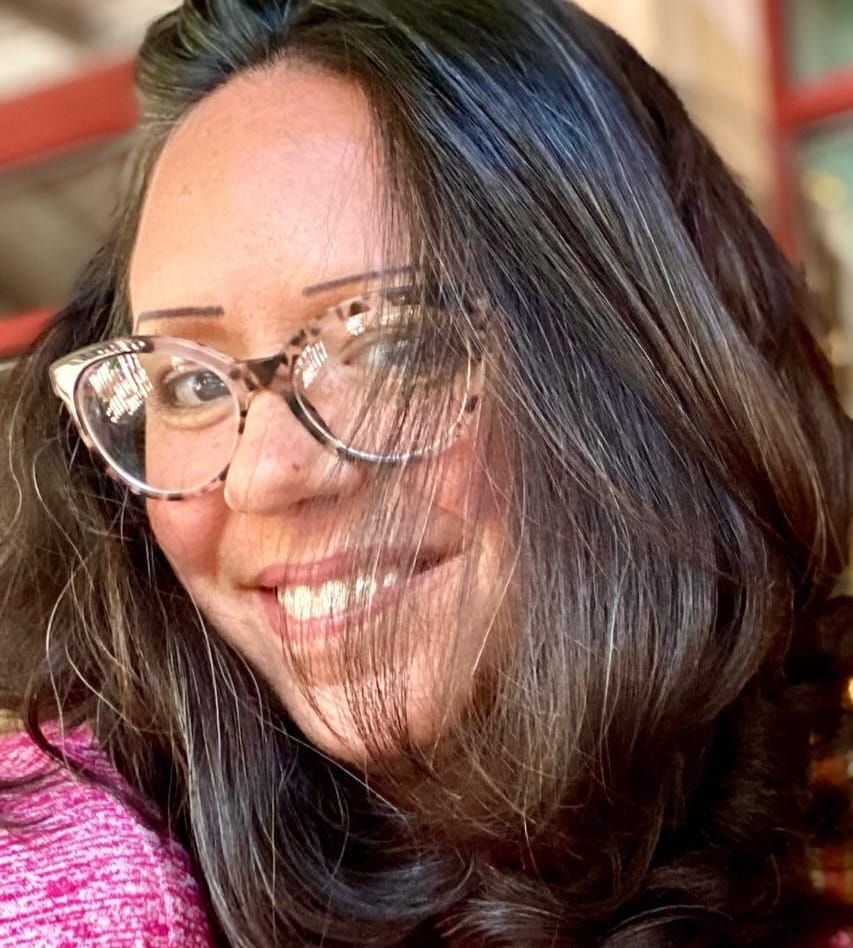
Sara Shea received her BA from Kenyon College, where she served as Student Associate Editor for The Kenyon Review. She's pursued graduate studies through the Great Smokies Writing Program at UNC Asheville and at Western Carolina University, where she studied with Ron Rash. Her work has appeared in The Connecticut River Review, Quarterly West, The Static in Our Stars Anthology, Key West Love Poetry Anthology, Amsterdam Quarterly, Gaslamp Pulp, Petigru Review, New Plains Review, The Awakenings Review and Atlanta Review. Shea is the recipient of numerous awards and fellowships, including the New Millennium Poetry Prize judged by UK Poet Laureate Andrew Motion. Shea writes professionally, producing marketing materials for a fine arts gallery in Asheville, North Carolina.
The Cat
I measure my days in ounces of formula, in medications crushed and stirred into a bottle. Every time I place her on the scale, I pray: today she begins to thrive. Soon, I tell myself, she'll gather momentum like a bicycle cresting a hill, gravity finally taking over. But she doesn't.
At eighteen months, my daughter still cannot stand or walk. She can’t chew solid food or digest it properly. Her delays stretch time. While other children race ahead, our lives seem suspended on a long, relentless climb.
Asheville pediatricians furrow their brows as one diagnosis after another fails to explain her constellation of symptoms. Low muscle tone. Repetitive rocking. Stereotypic hand-flapping. On the surface, it looks like autism. But something doesn't fit. My instincts tell me there’s another story woven beneath—something rare.
It’s no accident that I became her mother. I chose it. By then, I’d known love and loss, success and disappointment, enough to understand that life rarely arrives in the order we imagine. By age thirty-six, I wanted a child more than I wanted certainty. If I waited for the perfect partner, I might never become a mother at all.
I chose the donor, flipping through a catalog of men as though evolution itself had been indexed and alphabetized. I became a single mother by choice. There’s no one to trade shifts with. No shoulder waiting at the end of the day. No one to hand the bottle to when exhaustion overtakes me. There is no tapping out. She is the most important decision I’ve ever made, yet she remains a mystery. I love her with a ferocity that surprises me, and still I don't know how to help her thrive.
As she sleeps in her bassinet, impossibly small and fragile, I sit beside her and cry. I find myself taking inventory of the life that brought me here— freedoms I surrendered, the certainty I once possessed, the woman I used to be before motherhood rearranged everything.
My thoughts drift back to easier summers in Connecticut, to the freedom of being eighteen, when my biggest concern was which road to ride next and the future felt as open as the miles ahead.
~~~~~
A breeze carries the sweetness of honeysuckle through the screen door of my childhood home. I work my hands into the worn mesh of my Bontrager gloves, fingers slid through like claws. The house is quiet except for the distant hum of my mother’s hairdryer upstairs. Morning light bathes the backyard.
I whistle once, low and sharp. Azrael abandons the hunt and pads into the kitchen, her fur sleek as polished silver. She weaves between my legs, tail held high, the tip twitching. I bend to scratch her chin before setting down her food. She devours it, paws flexing against tile. Cats retain their instincts, close to the fang. Mornings she’d show up at the doorstep with a disemboweled mole, beaming, proud. Delighted by a night’s kill along the riverbank.
“I’m heading out for a ride, Mom,” I call, filling my water bottle.
“Finished your chores?” She shouts down. “Dishes done? Laundry folded? Cat fed?”
“Course, Mom!” I reply, cinching my pack.
I smear sunscreen across my nose, watching Azzie knead the tile, her claws catching faintly against the floor. It's an ancient instinct, a wild ghost. Instinct is older than memory.
Years later, I'll stand at a hotel front desk, a child on my hip, trying to explain why my daughter needs water— why her body depends on it. But on this summer morning, I know only the pull of the road.
Outside, the Connecticut summer morning smells of damp earth and sun-warmed asphalt. A cicada drones from high in the oaks. I swing a leg over my new Trek road bike and clip into the pedals, rolling forward as the chain catches with a familiar click and whir. Off I pedal up the incline, quads aflame. Far off, I hear traffic; trucks hauling riprap and wrapped timber to new developments, commuters sipping overpriced coffee.
The world feels different once I’m in motion— lighter, freer. The neighborhood falls away as I gain speed, air rushing cool against my face. I don’t have a destination, just the need to move, to chase morning before it melts into afternoon haze.
I’m eighteen years old, and the summer of 1998 tastes of wind and freedom. Sometimes, on long stretches of empty road, I imagine another rider just ahead— someone carving an invisible pocket; someone to share the wind. But it’s just that, games in my mind. Sometimes I do see another cyclist, and smile. I always hope they’ll ask me to join, but they just keep heading on their way.
Someday I’ll ache for the wild freedom of morning rides like this. Back when the world still felt whole. But here— in 1998, there is only cadence. Breath. Road.
~~~~~
Twenty years later, the world closes in. Not all at once— but steadily, like a narrowing road. I’m a single mother in the middle of a pandemic, rearing a special needs toddler whose body requires constant tending. Grocery store shelves are bare, but hospitals and morgues overflow. Therapy centers shut down. Playgrounds are wrapped in caution tape, pre-schools canceled, libraries and day care centers closed. Even the air feels dangerous. The simplest things—air, space, movement—become negotiations.
Failure to thrive, the doctors say. A body that lags behind itself. Milestones missed. Muscles slow to answer. Now, after whole-exome sequencing, they suspect a de novo genetic syndrome— something profoundly rare.
The prescriptions, however, are clear: physical therapy, occupational therapy, especially hydrotherapy. But YMCA pools are locked. Doors shuttered. CLOSED PER COVID-19 RESTRICTIONS. I keep searching. I drive from hotel to hotel across Asheville, walking into lobbies to plead my case to strangers.
“Can I use your swimming pool for therapy for my special-needs child?”
“No,” they say.
“No, sorry.”
“Not during Covid.”
It feels like riding into a headwind that won’t break. Once, I’d known how to move through resistance. How to lean into it. How to find a wheel to follow.
One gray November afternoon, I walk into a local inn. Rain has flattened everything— the sky, the pavement, my spirit. I hear water before I see the man at the front desk. He's tall and lean, with dark hair and a poker face. Quiet gray-blue eyes hold an unassuming stillness, the kind you barely notice because it asks nothing of you.
I give him the stump speech, child on hip, explaining the swimming, her rare genetic difference—how her body needs to build strength. The austere man listens without interruption. His forearms are lean and muscled. A bracelet bearing a cyclist's logo circles his wrist.
He studies the madwoman in front of him, as I shift my daughter to my left hip. His nametag says Jacob. And then—he says yes. Just like that. No hesitation. No policy. No suspicion. He hands me a key to the heated indoor pool and lets us in like we belong there. I nearly cry—not because of the pool, but because something in me has been braced for refusal, and suddenly, it doesn’t have to be.
Water changes everything. My daughter softens into it, buoyed. She learns to float, to breathe, to kick. Muscles that resisted on land begin to answer. Watching her find momentum, something in me finds it too. Jacob doesn't know it yet, but he's quietly become the hero in our story.
We visit Jacob's hotel every week that first pandemic winter. He slips me a key across the counter, the gesture practiced now—like passing a water bottle mid-ride: wordless, essential. He nods. I nod back. No questions. No record. Just trust.
Beneath my gratitude, another feeling surprises me. For the first time since deciding to become a single mother, I imagine a life where parenthood is shared. Where love arrives before the child, instead of after.
~~~~~
Sometimes, driving home from the hotel pool, I think about the cycling peloton. Riders take turns at the front, sharing the headwind. Like geese in formation, they understand something humans often forget: no one can push into the wind solo forever.
In my own life, I'm doing the opposite—carrying everything alone. Therapies. Doctor's appointments. Late-night feedings. The endless uncertainty of raising a medically fragile child through a pandemic. No one to share the work. Or the joy.
I think back to my first peloton. Autumn 1997, my freshman year at Kenyon College. A cool breeze stirs the maples as the cycling team sweeps across campus. A tight pack, legs pumping, bodies leaning through each turn in perfect unison. They pass in a golden blur— smooth, synchronized, effortless. I stop, utterly smitten. I don't yet know that one day I'll love a man who lives his life that way.
Bikes have always been transportation. This is something else. Power. Fluidity. Control. I start attending races, drawn to the way the peloton moves like a single organism, shifting and surging with instinctive precision. I discover a hunger for speed, distance, and the moment when nothing exists but the wind, and the burn in my legs.
I won't know then that I'll spend years inside a different kind of endurance— a global shutdown with no finish line, no crowd, no visible momentum. Or that one day movement itself will become something I'll have to find again, with help.
By mid-freshman year, my decision is made. I'm getting a road bike. I'm going to race.
~~~~~
I linger in the hotel lobby, talking with Jacob long after we've dried off and packed our towels. At first, he seems shy and awkward, the kind of person who avoids the spotlight. Then, slowly, he unfolds.
Pieces of his life emerge the way a landscape reveals itself on a long ride— not all at once, but turn by turn. A line from Steinbeck dropped into conversation. A passing mention of Calvino, casual but precise. Stories of riding the Blue Ridge Parkway. I begin to understand that people, like mountains, can't be known from a distance. You have to travel through them.
His stories arrive in fragments. Switzerland, where light settles differently across the Alps. Florida—heat, flat roads, the early miles that taught him endurance. Then, western North Carolina, where a cycling scholarship carried him into the mountains.
He graduates with honors from a small liberal arts college but never leads with that fact. Like a strong rider content to sit quietly in the peloton, he doesn't confuse visibility with importance. He never announces his strength. You only discover it by riding beside him.
Now he works sixty-hour weeks managing a hotel. He solves problems before they surface, anticipates needs before they're spoken, tending to others without drawing attention to himself. On night shifts, a book is always open beside him: The Reivers. Faulkner. A biography of Eddy Merckx. The Collected Poems of T. S. Eliot.
Jacob is a Cat 1 elite amateur racer, one step below professional ranks. He competes nationwide, riding long distances with a focus that borders on obsession, climbing roads most people avoid, always seeking elevation, embracing the long burn of ascent. I recognize that instinct. I ask about his ultimate goal. For the first time, he beams.
"The Tour de France," he says. "I'm training for it."
When he speaks, there's an economy to him that I first mistake for athletic discipline. He's built for endurance, wasting neither energy nor words. Our conversations cross immense terrain, though words themselves are few. I begin to suspect that meeting Jacob is its own kind of grace.
“I'm a cyclist too,” I tell him. “Nothing like you. I ride a Cannondale Six 5 every day. I mean, I used to ride…before I became a mom.”
Jacob says nothing. But from a millimeter of brow lift, I know the needle has turned.
~~~~~
At eighteen, I'm lean and sun-tanned, a creature of muscle and motion. I carve through Connecticut farmland, surging over rolling hills. I climb the basalt spine of Talcott Mountain, powering up steep trap-rock ridges. I lose myself in the gorges of Tariffville, where the river thunders beneath sheer cliffs inches from my tires. Water is always nearby— moving, cutting, shaping the land. I never think about breathing. I'm young. I have all the breath I need.
Years later, at age forty-one, as breath becomes masked and precious amidst a pandemic, I’ll stand waist-deep in a heated hotel pool, counting my daughter’s breaths aloud— one, two, three— then holding my own as she learns to swim underwater, waiting for her to rise and trust the air again.
In Granby, I trace the edges of quartz quarries, where hidden springs run green with copper. Each day, my shirt clings, sweat-salt crusting my lashes. I swipe my eyes with a bandana, watching tiny crystals shimmer in the sunlight before drifting away.
I hurtle downhill into the cool shade of hemlock groves, then coast across flats where the air hangs heavy with shade tobacco and corn. In West Simsbury, I pass Roaring Brook Nature Center, where I first learned the names of things—how to read a landscape, how to notice what lives beneath the surface. Back then, I thought knowledge meant naming. Now I know it means tending.
Sometimes, on long stretches, I sense another presence— not behind me, not quite ahead—just there. A shift in air. A pace I push to match. In meadows of the Farmington River Valley, Queen Anne’s Lace and chicory sway in the breeze. Massive sycamores line the streets like sun-bleached bones. I lunge through the land untamed—sinew and instinct, pulse and wind.
On Plank Hill Road, I'm a golden streak, racing the light. I'm a creature learning my territory—mapping ridgelines and river bends, inhaling cut hay and hemlock hush. The land's veins pulse beneath me: bike paths, back roads, animal trails. Each turn a tether. Each mile, a knowing.
As I discover hidden places, I begin to notice what's disappearing. New developments creep in like an invasive species. Fields and forests give way to subdivisions. Old farms and state lands remain, but their edges fray beneath the pressure of progress. I’m watching the wild slip away, acre by acre, as though earth itself is exhaling its last long breath.
~~~~~
Jacob and I bond over cycling and literature. Conversations stretch. It isn’t sudden, it isn't named. Just a gradual matching of pace. Jacob tells me about the rides he loves most. A solo ride from downtown Asheville to the summit of Mount Mitchell—one of the hardest road climbs in the South. Sixty miles round trip. More than six-thousand feet of climbing. He doesn't tell the story to impress me. He tells it the way people speak of places they return to when they need to remember who they are.
He tells me about another ride—a weekly group ride along the French Broad River to the historic town of Marshall. The road follows the river through sycamores, cliffs, and farmland before opening into long straightaways where riders settle into rhythm.
Jacob tells me how hungry he is after long rides. He craves protein. So I begin cooking for him, bringing homemade dinners to the hotel on the nights he’s managing alone. Top sirloin seared in my cast-iron skillet. Steamed vegetables. Baked sweet potatoes with sour cream and chives. Paper takeout containers passed across the counter, steam rising between us. It's an exchange that never feels transactional. He gives my daughter the gift of water. I give him nourishment. Fuel for the mountains that keep calling him back.
Beneath it all, something else takes shape: a partnership. In a time when everything else feels fragile, uncertain, stalled, we find a way to keep each other moving. Not fast. Not far. Just afloat.
One day in early spring 2021, Jacob asks me to lunch. Not in a grand way. Just: Would you like to go?
I say yes.
We walk the loop around a nearby lake first. My daughter giggles in her stroller, bundled against the lingering chill. Without a word, Jacob takes the handles, slipping into the easy rhythm of pushing her along the path.
The air has shifted. Winter loosens its grip. The first green pushes through. The lake holds that early spring stillness, a thin skin of reflection, everything beginning again. We fall into step beside each other. Not leading. Not following. Simply in stride. I notice it before I have words for it: how much easier it is to move that way.
After our walk, he treats me to lunch at the Arras Hotel, the elegant place I'd once mentioned wanting to try. He remembers. That matters more than the meal itself. Inside, it feels airy and fresh, sunlight through tall windows, the low hum of conversation, a world slowly returning to itself. We sit across from each other, but it doesn't feel like distance. Between us, my daughter sleeps in her stroller, her breath soft, rising and falling.
Conversation unfolds the way a good ride does—effortless at first, then climbing into places neither of us avoids. Books. Business. Cycling. The strange suspended time of the pandemic. Somewhere between the walk and the meal, I realize I'm no longer riding alone.
~~~~~
During the summer of 1998, the land around my hometown is changing. A developer proposes a shopping plaza on the old Deacon Higley farm. The historic Connecticut Western Railway disappears beneath fresh pavement, then reemerges as a pedestrian path. Rails to Trails. Even the old canal towpath, where mules once hauled cargo toward the Erie Canal, is widened and smoothed. History pressed flat. The land shifting beneath my wheels.
I don't have the language for loss yet. Only the feeling of certainties disappearing, timeless landmarks slipping away. Dump trucks loaded with unearthed rock and gravel thunder past, their wake plying me with a wall of dust. So I ride harder. Farther. As if distance itself could hold something in place.
At eighteen, I'm searching for what I call the true topography: hidden paths beyond the map, places not yet named or claimed. I ride until the asphalt ends, then hike into the forest, following deer trails, pausing to look beneath stones, into hollow logs and tangled roots. The farther I wander into the landscape, the deeper I disappear into myself.
Long before I know it, I'm practicing the kind of searching that will shape the rest of my life. Maybe that's what youth is: hunting for what can't be held, before time teaches us that everything we love is only ever passing through.
By midday, I've ridden thirty miles, looping through New Hartford, Collinsville, Avon, and Weatogue. The August sun beats down. I consider stopping for ice cream at October Farms Dairy. But the ride keeps pulling me forward. There's somewhere else I need to go first.
The old Drake Hill Bridge. A Parker truss built in 1892; the last of its kind. Its iron bones span the Farmington River. As a child, I’d stood here with my parents, watching floodwaters rise. After Hurricane Gloria in 1985, the river swelled, furious, nearly swallowing the bridge whole. I remember wondering if it would survive.
Now, as I approach, everything is calm. Linden branches stir in the wind. Hanging baskets spill bright flowers against the bridge's dark railings. Sunlight fractures across the river— gold, shifting, impossible to hold. I slow as I cross, not out of caution but to take in the beauty, to fix it somewhere inside me.
I don't yet know how many things I'll try to hold this way: a landscape, a body, a moment, a person riding beside me.
~~~~~
Through the spring and summer of 2021, Jacob and I begin moving through the world together. Dating? Maybe. We call it adventuring. We hike the trails of Biltmore, wander the mountains around Hot Springs and Marshall, and ride the long curves of river roads.
“Jacob, come back!” I shout into the wind when I can't keep up. He only grins and shrugs, as though speed is beside the point. I marvel at his racing physique— the powerful legs, the ease with which he climbs terrain that leaves me gasping. He rides ahead, then circles back.
We talk often about work and commiserate over the toll of the pandemic. We're watching the same crisis unfold from different angles. I’m marketing coordinator for a vacation rental company that nearly collapsed in the pandemic. Bookings vanished. Everything felt precarious, as if the ground might give way.
Jacob sees it from the inside. The hotel emptied. Hallways fell quiet, suspended, like a body between breaths. Outside, new patterns emerged: tents along creeks, homeless encampments beneath overpasses, people found shelter wherever they could. The pandemic didn’t create inequality so much as expose it, bringing lives long pushed to the margins into plain sight.
And inside his hotel—confrontations.
"Danger," Jacob shrugs. "Hostility. Squatters refusing to leave. Addicts cooking meth on hot plates. Homeless people trying to stay warm, claiming space the way any living thing does when it has nowhere else to go."
He doesn't dwell in the chaos. Jacob talks about systems—failure points, triage, turnaround plans. A whiteboard covers one wall of his bedroom: business ideas, stock tickers, investment strategies, cryptic graphs of vertices and edges. Arrows. Numbers. Possibilities. Even at rest, his chain is still spinning.
I navigate the world intuitively, through visceral instinct and emotion. Jacob is a cartographer. He maps it, studies its patterns. He craves permanence and repeatability. And yet— we’re solving for the same thing. How to survive in a shifting world. A world that too often mistakes rarity for invisibility.
~~~~~
Back in Connecticut, crossing Drake Hill Bridge toward Riverside Road, a tawny flicker catches my eye. I'm about to glimpse what we've been losing all along.
I glance down at the rocky riverbank.
A cat.
Massive. Golden-brown. Crouched at the water's edge. Its pink tongue laps at the river while its long tail curls behind, black tip twitching. Sharp shoulder blades rise beneath its sleek coat. Enormous paws rake the sand with primal grace.
I brake, unclipping a shoe. At the click, the cat lifts its head. Hackles rise. Shoulders roll beneath its coat like water over stone. Bright, wild eyes—the color of topaz—lock onto mine. Long whiskers frame its golden face, dark smudges shadow its nose and muzzle. Every muscle is still, coiled with silent power.
Neither of us moves. Two statues in the August heat. My heart slams against my ribs. I could turn back, pedal away. I don't.
The air hums, charged like the breath before a storm.
Cougar. Puma. Panther. Catamount. Mountain lion. Shadow cat.
So many names for what cannot truly be named. Or tamed. Or kept.
I think of the way Azrael sometimes caught a mouse and toyed with it for an hour— releasing it, stalking it, then pouncing again. Practice. Instinct. To the mouse, of course, it was terror.
The lion stares through me, unblinking, as though reading a language written beneath my skin. He could kill me in an instant—or decide not to. Either way, we both know whose choice it is.
Then, with a flick of its long golden tail, the creature turns. Its body tenses, then explodes into motion. Strong limbs carry it up the riverbank in a single fluid burst. It slips between linden and birch, streaks across Riverside Road—a flash of gold climbing toward Talcott Mountain before vanishing into shadow.
Gone.
Only the sway of a branch marks where it had been, like evidence of a rare crime.
A car slows to a stop. The driver sits frozen, staring. Then she rolls down her window and points toward the trees where the cat disappeared.
"Did you see that?" she gasps. "Oh my Gawd!"
~~~~~
Wanting to understand Jacob better, I search for him online. Almost nothing. No Facebook. No Instagram. No LinkedIn. No digital autobiography assembled from carefully curated photographs and opinions.
When I ask why, he shrugs.
"That stuff does nothing for me. It isn't real."
The only trace he leaves online is race data. Times. Decimal points. Rankings. Distances. Average speeds. The numbers tell me he's extraordinarily fast. They tell me nothing about the man.
I may still be puzzling over Jacob's true nature, but my daughter's mystery has finally been named: Wiedemann-Steiner syndrome, a profoundly rare genetic condition caused by a mutation in chromosome 11. Perhaps one case in eight million births. North Carolina has eleven million people. She could be the only child in the state. They don’t even teach it in medical school.
She follows the logic of her own instincts. She repeats words and phrases— echolalia. Her mind and body move in spirals, circling familiar sounds and movements, returning to them again and again. What looks like repetition is how she gathers momentum.
As the pandemic loosens its grip, we begin finding our way toward resources: speech therapists, neurologists, respite caregivers, support groups, educational programs. At last, there's a map. Travel is possible again.
I return to Connecticut so my daughter can spend the summer with her grandparents. We attend medical conferences, learning everything we can about her syndrome. Jacob and I stay in touch through calls and texts. One evening he sends a photograph: a pink sky above blooming rhododendrons. I know the place before he tells me. Craggy Gardens on the Blue Ridge Parkway.
He texts me a photograph of his favorite painting: Bonaparte Before the Sphinx by Jean-Léon Gérôme. Napoleon sits alone on horseback before the Great Sphinx of Giza, contemplating the ruins of an ancient civilization. I ask Jacob why he finds the painting so compelling.
"It's the ultimate riddle," he replies. "Man confronting fate."
I'm left puzzled by his fascination.
One afternoon, Jacob calls to tell me about a novel he's just finished—1Q84 by Haruki Murakami. He speaks with excitement, tracing its strange, shifting logic, the way it bends reality. It isn't small talk. It's immersion. I borrow a copy from the library. More than a thousand pages. Jacob has read it in just a few days.
I ask him to time himself reading. Later, he tells me: seven hundred words per minute. He reads as fast as he races. The velocity of it unnerves me— the way his mind moves. He says he has to slow himself down on purpose, forcing pauses to write notes in the margins.
"Stories help me understand people."
I wonder if he's a savant. Maybe it’s Asperger's. When I ask, Jacob only shrugs.
"I've never been tested. Would it change how you feel about me?"
"No," I say. "Of course not."
He studies literary characters the way he studies terrain—tracking patterns, reactions, the smallest shifts in behavior. I think of the cat, that brief glimpse all those years ago. The way it watched me, every muscle alert, reading the world faster than thought. Precise. Instinctive.
I try to read the book but make it through only the first chapter that summer. I'm too busy traveling.
"I miss you. COMEBACK," Jacob texts.
I know nothing about Murakami then. Years later, I’ll read 1Q84 from beginning to end. Only then will I understand why he wanted me to.
~~~~~
That summer night in 1998, over dinner on the screened porch, I try to explain to my parents what I've seen. The table is spread with grilled hamburgers, fruit salad, and a vase of blue hydrangeas. Fireflies blink in the garden. Beyond the porch, the woods hum with crickets and cicadas.
"It was huge. Golden. A mountain lion, right there by the river..." I whisper, as though speaking too loudly might dispel the memory.
My father flips a burger on the grill and shakes his head.
"No. I don’t think so. You probably saw a bobcat. Mountain lions don't live in Connecticut. They've been gone for more than a century."
I grip the edge of the table, knuckles whitening.
"I'm telling you, it was a mountain lion. It had a long tail. Massive paws..."
"They were hunted out in the 1800’s," my father says. "Urban sprawl. Highways. Habitat loss. There's no way one could survive here now. Bobcats can get pretty big. People frequently mistake them for cougars."
"It wasn't a bobcat."
My mother studies me for a moment.
"Suppose you did see a lion," she says. "Call the Department of Environmental Protection? Maybe they'll find evidence."
"I'll call in the morning," I sigh, sinking into my chair. "I just wish you believed me."
My father sets down his fork and meets my eyes.
"It's not that I don't believe you. I believe you saw something remarkable. It's just... highly improbable. I've worked with the local land trust for years. I know the history here. Mountain lions disappeared from Connecticut."
~~~~~
Despite Jacob's world-class racing speed, our relationship moves slowly. We are friends before we're anything else. Moments gather into years of memory. An Easter egg hunt—Jacob kneels in the grass at sunrise, hiding plastic eggs before my yard fills with kindergartners. Saturday mornings at the farmers’ market. Moonlit walks through milkweed and fireflies. Filet mignon at the Star Diner in Marshall, overlooking the swirling French Broad River. Nothing dramatic. No grand declarations. Just a hundred small moments accumulating weight.
And then, one night, we become lovers. A week later, I'm asleep when I feel the mattress dip beside me with the weight of him. I feel his strong hands on my body and I startle awake. It’s after midnight.
"Jacob?” I whisper. “How did you get into my house? The door was locked."
"I biked over." he says. "When you didn't answer, I figured you were sleeping. So I shimmed the lock. Sorry. I thought you wanted me here."
I stare at him in the darkness, caught somewhere between disbelief, fear, and admiration. He seems utterly certain of himself. Confidence bordering on audacity. A locked door is a problem to solve, not a boundary. Most people would turn around and go home. He simply finds another way in.
Jacob sleeps beside me through the night. His heartbeat thunders against my own chest. When I wake at dawn, he’s already vanished.
By the spring of 2023, I'm tired of renting, tired of temporary places. As post-pandemic real estate prices soften, I begin searching for a house near my daughter's school. Jacob rides every neighborhood by bicycle, scouting the terrain. He covers hundreds of miles through Weaverville, Alexander, Marshall, and Hot Springs, returning with precise reports on traffic, hills, and the character of each place.
That summer, I buy a home in a neighborhood we both love. Soon afterward, Jacob accepts a hotel management position just minutes away.
"This way we can spend lunch breaks together," he says.
He offers the explanation as though it's simply a practical career decision.
Love, I'm learning, doesn't always arrive like lightning. Sometimes it moves the way a river does—slowly, quietly, reshaping the landscape long before you realize anything has changed.
Life is busy. I'm remodeling a new home, juggling motherhood and two part-time jobs. Jacob's new position is demanding. Still, we carve out hours for each other.
Then, in September 2024, the world comes apart again. Hurricane Helene tears through western North Carolina. My home floods. Roads disappear. Mountainsides collapse. Entire communities are cut off. Asheville's River Arts District, Swannanoa, and Marshall are devastated.
Jacob remains calm. He manages his hotel, caring for stranded guests. He works around the clock through airport closures, power outages, water shortages, and the slow unraveling of ordinary life.
While the rest of us struggle to comprehend the scale of the disaster, Jacob does what he's always done. He endures. One problem after another, he solves what he can. Quietly. Methodically. Never asking to be noticed.
Everyone says the same thing. Climate change. Storm of the century. A once-in-a-lifetime event. This shouldn't have happened. Yet I've heard those phrases before. My daughter's rare diagnosis. The pandemic. The Great Smoky Mountains Fire. Now Helene. Disasters no longer feel exceptional. They feel cumulative.
The world I grew up in is changing faster than memory can keep pace. Weather no longer behaves the way it once did. Seasons arrive out of order. Rivers redraw themselves overnight. The landscape becomes unfamiliar.
I think of the cat again. How quickly it knew what belonged and what did not. How alert it remained to every shift in the forest. Animals notice disruption before we do.
Perhaps that's what unsettles me most about Helene—not the floodwater in my home or the debris strewn across Asheville, but the realization that even mountains are no longer permanent. Through it all, Jacob remains what he has always been: steady. My one constant in a world that keeps rearranging itself.
~~~~~
"There's a letter for you," my mother says as I clear the dinner dishes. She hands me a stiff envelope embossed with the Kenyon College seal. I wipe my hands, tear it open, and unfold the letter.
Greetings Cyclist,
We've been watching you ride. Your strength, endurance, and instinct on the road would make you a valuable addition to the Kenyon College Cycling Team.
Our season is gearing up. We're training for GOBA and XOBA, two grand cycling tours that will cross that state of Ohio. We hope you'll join us.
My heart thunders as I read, my fingers tightening around the letter. The same surge of adrenaline I felt locking eyes with the lion.
Push your limits. Compete in regional and national races. Crave the thrill of the ride? This is your chance.
I think of the lion— its muscles coiled, its grace effortless, vanishing into the woods as though it had never been there.
But it had.
And so had I.
Our first ride is September 27. See you out there!
I fold the letter slowly, my mind already racing ahead. I belong to the wind, just as the lion belongs to the mountain. I feel the hunger in my legs and lungs. It's more than sport. I'm hunting—for the limits of my strength, the edge of speed, the wild beneath my own skin.
That night, below a sky of glittering stars, I drift to sleep with Azrael kneading the quilt at my feet. In dreams, golden lions leap up riverbanks, their bodies slicing through the darkness. They prowl ridgelines of Talcott Mountain, their screams splitting the silence. Low roars rise from caves like distant thunder, calling to something deep within me.
At dawn, I find the number for the Department of Environmental Protection and call. A man listens patiently as I describe what I saw near the old Drake Hill Bridge. Then, the line goes quiet.
"Evidence would be key," he says. "Mountain lions don't exist in Connecticut. But if you saw one..." he pauses. "You were incredibly lucky. He was the last of his kind."
His voice softens.
"Perhaps he belonged to another place, and was just passing through."
~~~~~
On July 1, 2025, I'm out of town visiting a friend while Jacob joins one of his regular group rides: Tuesday Night Worlds. The route follows North Carolina Highway 251, a narrow ribbon of pavement winding between limestone cliffs and the French Broad River toward Marshall.
I know the road well. In July, the byway is thick with mimosa, kudzu, and wild clematis. Invasives climb weathered barns and rusting trailers. It’s one of those roads that seems to belong as much to the river as to the people who travel it. On humid nights, the air smells of honeysuckle, mud, and diesel, while the French Broad carries its ancient rot.
Jacob is at the front of the group, setting the pace for two younger cyclists as they move along the river corridor, hugging the fog line. He has just attacked off the front, opening a gap on the others. On that flat stretch, he's likely traveling close to forty miles an hour. The posted speed limit is forty-five.
Then, a dump truck carrying quarry rock fully crosses the double yellow line, veering into the cyclists’ lane. The head-on collision is catastrophic. It kills Jacob, dragging him under the truck for yards. Another cyclist, Lennie, is also struck and killed, his body thrown against a cliff. A third rider, Griffin, pivots and miraculously survives, with minor injuries.
The truck plunges over the rocky embankment before coming to rest against boulders and river birch. In an instant, an ordinary Tuesday evening ride becomes a catastrophe. The dividing line of my life. Everything that came before. Everything that followed.
Because I'm traveling, I don't learn what has happened right away. Jacob doesn't answer my texts or calls. It's unlike him. Three days pass before I see the evening news. For a few impossible seconds, I convince myself there must be another Jacob. Another cyclist. Another life. Then the truth reaches me. I collapse. By then, the man I love is already gone.
My daughter is nine now. Against all odds, she's thriving in elementary school. Now it's my turn to attempt the impossible: explaining death to a child. I tell her Jacob was killed in a crash. She listens quietly.
"When will he feel better?" she asks.
When I tell her he won't, she looks at me as though I've misunderstood the question. To a child, death is an abstraction. An unfamiliar word. Every day, she asks when we'll see him again. The question shatters me because, in my own way, I'm asking it too.
Over months that follow, dazed by shock and trauma, I search the rocky embankment where the truck left the road. I'm searching for what I've always searched for: evidence. A pattern. A truth someone overlooked. I search with a drone. A metal detector. My elderly hound dog.
There are no skid marks. The trucker never hit the brakes. I find fragments of Jacob's bicycle. Fifty meters down the cliff, beside the riverbank, a shattered drop handlebar lies amid a stand of white daisies. I find a broken chain link, a crushed brake lever. A metallic scrap of dump truck trim. A balled-up piece of burned tinfoil.
It seems impossible that a human life can be reduced to scattered debris. The landscape has become an archaeological site of loss. I thread the fragment of Jacob's bicycle chain onto a silver necklace and wear it close to my heart. The Shimano link is stamped VIA— the Japanese Vehicle Inspection Authority's mark certifying that it met the standards for safe travel.
But grief rewrites language. The letters become something else. Via. By way of. Through. I think of roads not as destinations, but as places where lives briefly converge. Jacob came to me via the road. Our journeys overlapped for a few precious miles before his continued beyond the edge of mine.
The media calls the crash a tragic accident. I want to believe that. I want to forgive. I want to heal. And perhaps forgiveness begins here, in the humility of knowing that none of us is the final judge.
Yet the truck driver continues posting photographs and videos of himself behind the wheel of commercial trucks. In some, he appears to be driving on mountain roads where commercial truck traffic is prohibited. The videos are set to modern outlaw country, including Bryan Martin's "We Ride." Around Halloween, he shares memes joking about dead bodies. I cannot look at these without flinching.
I study the posts the way I've studied every other clue, searching for an answer. The images offer none. They only deepen the riddle. I sit through hearing after hearing, each ending in another continuance. I wear black business suits to court. The truck driver arrives late in ripped jeans and dirty T-shirts.
None of that is evidence.
These are superficial things.
I learn he has an eighth-grade education and lives in a single-wide with his parents. Still, none of that tells me who he is. So I watch his face in court. His eyes. The faint smile that surfaces at moments when a smile feels strangely out of place.
I'm searching for remorse. Recognition. Any visible sign that he understands the magnitude of what’s happened. But a face, like any landscape, can be misread.
Ten months after the crash, toxicology reports reveal he had methamphetamine in his system on that fatal night. I circle the same questions. Was it impairment? Distraction? Did the trucker drift across the center line without realizing it? I don't know. I may never know. I find no evidence of anything more. Only questions that refuse to release their bite.
Jacob spent thousands of hours riding these mountain roads alone. The trucker drove the same region. Is it possible their paths had crossed before? I find no evidence of a prior encounter. Only questions stalking the edges of reason. Are these thoughts the echoes of trauma, my mind following every track through the wilderness, or some older instinct refusing to abandon the trail? Intuition is not evidence. It never will be.
The questions that follow belong to grief, not to proof. Jacob was leading the group, the first cyclist visible when the trucker swerved. Is my grief searching for an explanation larger than an accident? What happened in those final seconds? Why? Grief must exhaust every possible trail before healing begins where explanation ends.
I stand at the foot of the cliff, searching the crash site. Bruised and bloodied from scrambling through rocks and thorny brambles, my skin burning with poison ivy, I face the ancient wall of stone. Suddenly, I am inside Jacob's favorite painting.
I am Napoleon. Oedipus. Confronting the Sphinx. The lion is silent.
It only watches.
The ultimate riddle. One that cannot be solved by intellect.
White ghost bikes are bolted to the cliff face, their frames bright against dark stone. My daughter and I leave fresh flowers beneath them. The crash site has become a shrine.
The victims' families turn their grief toward advocacy, joining a national organization, The White Line, to fight for safer roads and stronger protections for vulnerable road users. They launch the North Carolina Chapter of The White Line, pushing for systemic change: safer commercial trucks equipped with Automatic Emergency Braking capable of detecting cyclists before impact. They champion legislation requiring the technology, more rigorous crash investigations, mandatory drug testing after fatal crashes, and the recognition that roadway deaths are preventable— not inevitable.
The White Line helps families navigate the bewildering aftermath of catastrophic loss, transforming private grief into public witness. Built not around prosecution, but around the people left behind, the organization offers what grieving families need most: Empathy. Community. Practical resources and companionship. Their work is measured not in convictions, but in collisions that never happen.
Memorial rides are organized. I ride inside a peloton again, and for a few miles, grief becomes something we carry together. New laws are proposed in the aftermath of tragedy. This work is honorable. This work matters. It will save lives.
But it cannot save Jacob. That road has already been traveled. He is not the first cyclist killed by a motor vehicle, and he won’t be the last. Jacob would want the Peloton to keep moving forward.
Nearly a year later, we stand in the Madison County courthouse awaiting a plea agreement. By then, the investigation has left troubling questions. After the crash, police did not maintain continuous custody of the truck driver. The drug test was delayed. Victims are told that a plea agreement is the viable path toward accountability. Investigative uncertainty leaves fertile ground for doubt. And doubt keeps grief restless and searching.
The courtroom is filled with broken people—families, friends, cyclists. By now, I've learned that grief does not move in a straight line. It circles back on itself, braiding memory and evidence, love and loss, past and present. It returns without warning. I listen as charges are read and the plea agreement is entered.
The truck driver is convicted of two counts of involuntary manslaughter, both Class F felonies, and one count of driving left of center.
No prison time.
Six months of house arrest.
Jacob remains dead.
These facts will never reconcile themselves in my mind. Sentences fall short.
My fury growls.
The justice system feels predatory—a vulture perched over the wreckage, interested not in grief but in reducing catastrophe to what can be cataloged, charged, and consumed. Around its edges, attorneys circle, scavenging scraps of trauma.
They can keep the scraps.
I’ll keep the heart of the story.
My grief has teeth now.
The legal process, intended to deliver justice, becomes another broken landscape to survive—one that repeatedly interrupts and diverts my slow journey toward healing. The legal system is not built to recognize grief; grief is an ancient animal moving through its blind spot. The legal case ends. The questions do not. The muddy river keeps flowing past Marshall. Cyclists still ride Highway 251. The world keeps turning with its terrible indifference. And the man I love never comes home.
~~~~~
Glimpsing the mountain lion in 1998 feels, in memory, like standing at the edge of a disappearing world. I am eighteen, all tendon and momentum, entering the prime of my life, certain the future will keep unfolding before me.
The lion pauses at the tree line and watches. For one suspended moment, our lives occupy the same narrow opening in time.
Then it vanishes.
Forests are thinning. Mountains are changing. Though I do not yet know it, species, landscapes, entire versions of myself are quietly slipping away.
Sometimes I think of that lion as the wild self I carried then—muscle, hunger, grace—moving through the world before fear, fatigue, and grief began their work. We lock eyes for a single moment, two creatures at opposite ends of the same story.
He is disappearing.
I am just beginning.
Perhaps what I saw was more than a mountain lion. I saw what it means to exist at the edge of belief—to live brightly, briefly, and disappear before the world knows what it has lost.
After Jacob's death, I find myself thinking about that lion again. Not as an omen, but as something that slipped between worlds—a glimpse of a parallel reality, where the rare and the impossible reveal themselves for only an instant before vanishing again.
Perhaps that’s what love is. Not permanence, but encounter. Two lives crossing briefly in the vastness of time. The lion vanished into the forest. Jacob vanished around a bend in the river road. I’ve spent a lifetime searching for both.
In 2011, when a Connecticut newspaper reports that a mountain lion, struck and killed on the Merritt Parkway, had wandered thousands of miles from the Black Hills of South Dakota, I clip the article and fold it into a journal.
Proof.
Not just that the lion had existed, but that I’d trusted something true before the world was ready to believe it—what it means to move wild and unafraid before the world begins to fence us in.
In 2025, after Jacob's death, I open that same journal and find the faded news clipping tucked between its pages. I wonder if there will be another article someday. One that finally tells the whole story.