Fiction by Conor Clark
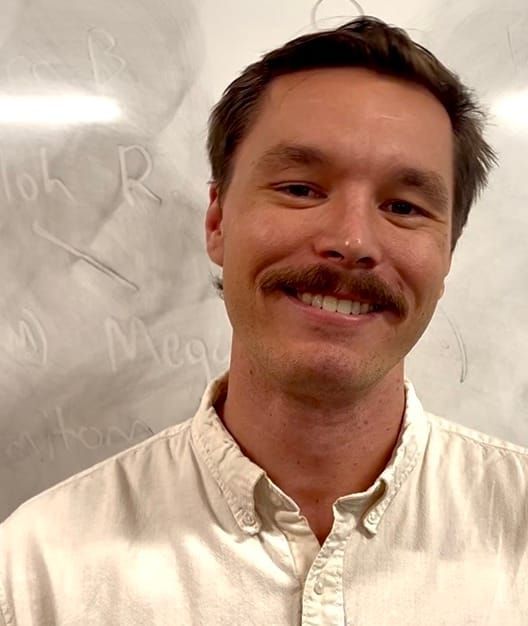
Conor Clark is a fiction writer pursuing his MFA at the Warren Wilson Program for Writers. His work has been published at Watershed Review. He has been a facade inspector, Professional Engineer, Dogboy frontman, temple builder, and tech strategy consultant. He lives in Ridgewood, Queens.
Scared Sacred
The nurse keeps asking do I want something for the pain. She say, you can’t see, Mr. Lee.
I say, don’t worry, it’s just a snake bite. I got all the light I need.
Sit down, son. There’s a chair by the window. Don’t mind that guitar case. That comes later. Three weeks you been shadowing me, and you handle better than I did at your age. But there’s a heat coming off you I been meaning to speak to, and I’d rather do it now than trust I’ll get another good afternoon.
First, I have to tell you a thing I never told nobody. Not your mother. Not your daddy. Not even the Lord, though I expect he had it anyway.
Long time back, there was a man lived behind us in Fort Payne named Odell. Odell kept a cage of wild birds up in a dogwood out front. Grackles mostly, a few wrens. He’d built it himself outta window screen and hung it off a limb about twelve foot up.
I asked him one day what he meant to do with them. He said he was gonna play with them a while. Tease them some. And then one day soon he was gonna open that cage, let them go, and shoot them out the air. I told him I didn’t care for that.
He said, don’t worry yourself, son. They ain’t no good. They’re pests.
I didn’t care for that either.
Next morning I did my chores in the dark and went over there before sunrise. Climbed that dogwood. I had my hand on the latch when I saw that copperhead coming down the limb toward me, and I tell you what—I never been that scared since. Not one time.
But I got that latch open. Those birds went out all at once, and the noise of them put me off the limb. I hit the ground flat on my back with no air in me, and while I was laying there, that tree spoke.
Now believe you me, I had the same look you’re giving me now, but I’ll declare: that tree spoke, I’d swear to it.
And it said: Make the world sacred.
And I listened.
Then I watched that copperhead slither down the trunk right into Odell’s woodpile, and I got up. Stood a while. Looked at that tree, then looked at that pile, and reached in.
I laid her on Odell’s doorstep and walked home and never said a word about it to anybody, and he never said a word to me.
I quit school not long after. There wasn’t anything crawled in it for me.
I already had my instructions.
Those were the good years. I handled up and down Sand Mountain sleeping in a truck bed with my snakes in my father’s guitar case. I painted my orders on the lid. I never did get right with letters, but I wrote it down anyway: Make the world sacred. What else have you got?
I met your daddy on the 75 circuit. Rainsville, Ider, Henagar, Sylvania. Sunday night services, Holiness churches. Brush arbors in the summer with lamps hung in the trees. Two dozen years on the circuit, I never once took a mark. Not a one. Your daddy got bit twice before he turned twenty and he’d show you the two white dots on his thumb like a man showing off a wedding band. Me, nothing. I’d reach in that box like it was your mama’s china cabinet.
Oh, bless it, Lord, there’s nothing else like it. And I’ve stopped trying to explain it to people who come asking.
But one look at you I know you don’t need telling. You got death in your hands, but all you feel is the Lord. Your whole life goes quiet. Everything you ever did wrong goes with it. Then you put her back in the box and you’re just a man again, standing in a church with your shirt stuck to ya.
Mark sixteen eighteen. They shall take up serpents; and if they drink any deadly thing, it shall not hurt them. That’s the last thing the Lord said before he went up. Last thing your daddy said in that barn out near Rainsville, too.
He was maybe twenty and had no business being anywhere near a pulpit, but he had the best hands I ever saw on anybody. He could take a snake like it belonged in his grasp, like he belonged there with it. No fear in him. No performance, neither. The snakes knew it. So did the dogs, the horses, anything with a pulse and enough sense to leave the man alone. He wasn’t much of a preacher. He just had some wild thing in him that faith couldn’t explain. Something older than belief. Something that didn’t need a name.
Thinking back on it, he said this thing once. He must’ve been hardly fourteen. The law passed in 1950. They made “serpent handling” a felony. You believe that? Later on, seventy-five I think, they backed off and made it a misdemeanor. Judgement first. Mercy later. I guess even Alabama figured a man could be wrong without needing to be ruined for it. We were sitting on the tailgate outside this garage out near Ider.
Somebody’d brought the paper out on the day the law came down. He read it to me, folded it up on his knee, and said, well, I’m gonna miss the pressure.
I say, how you mean? Law or not, there’s still a snake in that box, still a job to do.
He said he wasn’t afraid of no snakes. Just the people ain’t really his relish. Before the law passed, anybody could walk through that door. Sheriff. Newspaper. Somebody’s brother from Birmingham who thought us all up out our minds. Therefore, he say—he was always talking like that—you came correct. You wore a tie. You didn’t handle unless it was on you to handle, because there was a room full of people itching to call you a fraud, and every one of them was right to wait and see. Now, he told me, It’s ours. Nobody’s coming. We can do whatever we want out here in the dark.
He didn’t say it like a good thing, and he was a smarter man than people gave him credit for, on account he looked like what he was.
Your daddy talked to God more than any man I knew. Had the spirit on speed dial. But you call out in the dark and something answers, you’d best be sure about who’s calling back. The Holy Ghost ain’t the only thing awake at that hour.
I told him that once. He laughed at me.
That man was not afraid of anything in this world. Not the box, not the law, not the mountain at night. Not dying. People took it for faith. I did too, for a while, but I was wrong. Faith isn’t having no fear in you. Fear keeps you honest, keeps you counting. Your daddy quit counting. He never owed a man a dollar, and never owed a snake a minute of caution, and that’s exactly what killed him.
Look out that window. Dadgum, I love palm trees. Wild country, wild people. Down here, they got the sense to be afraid of the land. Smart ones stay on the pavement and leave the rest alone, thank God. Took me thirty-some odd years to figure they got it closer to right than we ever did up on that mountain.
Your daddy got bit in a barn by a cottonmouth we took out the creek that April. She was a bad one—she’d been striking the box. He went down and there wasn’t any calling anybody, because who had a phone? What would we say?
I sat with him four hours. He knew me the first two.
Then I went out to the truck and I killed that snake with a shovel.
Let me tell you something, I loved my snakes. Twenty years, I’d never harmed one, not ever, because they ain’t ours to harm—you borrow one out the field and you put it back—that’s the whole arrangement. I broke her head with a shovel in front of six people and nobody said a word to me bout it, then or since.
And I have not felt the Lord’s hand on me once since that night.
I was thirty-two with a case full of snakes and a sentence scrawled on the lid that I had not made one lick of progress on. That’s the condition I was in, that night, when I went walking.
Rainsville, after midnight, late July. Every storefront dark and the light over Main and Seventy-five swinging yellow, yellow, yellow and nothing coming either way to caution. Bugs boiling around the mercury lamp on the pole by the bank of Piney creek, and every so often a June bug would burn out and drop and hit pavement like somebody flicked a pebble at you.
That was the only sound. Things falling out of the light. I laid down my case.
I stood there at the cross and said it out loud. I said, I can’t carry this. Somebody take it. I’m not asking a price for it, I’ll hand it over free. Whatever comes after, I’ll take that too.
And nothing answered. I want you to hear that part, son. Nothing answered. Nothing good ever does out there in the dark, and any man who tells you different is selling.
I picked up my case and set to walk home, when I saw a flicker to the North, and there was a fellow standing at the crossing by the bank.
Clean shirt. Empty eyes. I won’t tell you what he was. I’m not a liar and I’m not a fool and I’ve learned enough since then to know there’s a great deal on the loose in this land that we know not a thing about, nor should we care to.
People want to tell you he works a dirt crossroads out in the country somewhere, midnight, guitar in your hand. He doesn’t. He works Main Street. He works where the business gets done, because that’s where his business gets done.
He said, You got problems, Lee. You looking for trouble too?
I asked him where the Lord was.
He said, Home. Seemed upset about something when I left. You want to guess what?
Then he said a thing I turn over in my head, better part ever day, thirty years: Why do I have to frighten a man before he’ll turn his head and look at me?
I didn’t have an answer. He didn’t seem to want one.
He tapped a talon to his temple and said, judgement and mercy. From where you’re standing they don’t favor one another at all. But from where I stand you can’t hardly tell them apart.
Now that’s the kind of thing you’d hear any Sunday in any church in the county and think nothing of. But when he said it, I felt my heart glow hot.
Then he looked down at my case. He read it out loud, like a sign in the window:
Make the world scared. That what you want?
And I said, That’s right.
I said it because I was tired. I said it because I was scared. I said it because I have never once been certain, from that night to this bed, whether the devil is dyslexic or my penmanship piss poor, and there is nobody left alive worth asking. What’s that case say to you, son?
He said, Florida.
I didn’t ask his advice. But he gave it. And, therefore, I had to pay him his due. Only trouble was, at the time, I didn’t know the figure. Leave a debt open long enough and he’ll get creative about collecting it.
You know most of what came next. You were born in August. I moved to Apalachee Bay in September. And for seventeen years not a thing happened. That’s the part nobody tells you about a bargain. I kept waiting on the other shoe. I painted houses, mowed lawns, and sat in a rented room off Spring Warrior road listening to the window unit and thinking I’d been taken by a man in a clean shirt who liked to talk, and some nights I was relieved about it, and some nights I was not. I had nothing but some cans of regal, the shirt on my back, and that there case.
Well, that’s a stretch. I had my faith, and I had snakes.
People down there find a moccasin under their house and they’d pay ten dollars to come take it away, but I never charged but five because I wanted the snake. Word gets around a county like that faster than it does a city. By seventy-three I was the snake man in three counties and had a shed out back that sounded like rain when the weather turned.
Then a woman from Taylor county came to see me. The federal government had put out money for schools to teach children about the outdoors. Not a little money neither. Somebody in Washington wrote a law and the cash came down through Tallahassee and landed in a county with eleven thousand people in it, and not one soul knew what to do with it.
She had a folder with her.
She said, we have got to spend this, and we hear you got snakes.
Why don’t you sit with that a minute. A preacher who quit the fourth grade and never did learn how to spell got made a licensed reptile educator of the Big Bend by an act of Congress.
He gets his business done on Main Street.
She filled the papers out herself, at my kitchen table, and turned them around and pointed at the crosses to sign. I signed them. I did not read them. I have signed a great many things in my life that I did not read, and I have noticed that it always goes the same direction.
They bought me a truck and a new set of cases and an eastern indigo snake out of a dealer in Ocala. Big black thing, six foot, glossy as a shoe. Gentlest animal God ever made. Children could hold it in a line and it never so much as pulled.
So I stood there, in cafeteria after cafeteria, holding that snake up telling forty, fiftyleven children that this here is a good snake, a helpful snake, a friend to the farmer.
Because it eats rattlesnakes. That’s what an indigo does. It goes down in a gopher hole, and it kills them, and it eats them whole.
Hear me on this, because it took me the better part of thirty years to realize: what was in my hands was not a serpent. A serpent is a thing that can kill you. That is the entire point: you take up something, with your death inside it, and the Lord holds its mouth shut, and everybody in that room sees Him do it. That indigo could bite—bite a child no less—and it did, and there was blood and hollering and a bandage, but that was the end of it. She went right back to class. Nothing was held shut. Nothing was proved. There was nothing in that snake for God to hold. I spent my second life holding up the shape of a thing with all the death, all my faith, taken out.
In public schools I can’t say Jesus’s name. So I say, everything that scares you was made on purpose, for a purpose. I say don’t ever reach in a woodpile you can’t see the bottom of, and I tell them before you act, take a moment to just stand still and listen. Then I let them carry all that home, and work it out for themselves. It’s not preaching, but I’m teaching, and I’ve made a deal with myself that that’s close enough.
But every one of those children walks out afraid. Every single one. Which means they will not reach in the woodpile, they will look the other way, and they will live, and I have decided to call that mercy. I don’t know exactly what it is. All I can say is not knowing has never once slowed me down.
I kept my rattlers out back the whole time. For myself. For Sundays, more or less.
There’s a line in the Song of Solomon, you know it, don’t you? They made me the keeper of the vineyards; but mine own vineyard I have not kept.
Write that down. It happens slow enough you don’t catch it. A talk in Perry on Tuesday, then Cross City, then two more weeks with you of nothing but driving and forms and a woman from the district wanting to know my numbers. And the shed just sits there. And you keep meaning to go sit with them the way you used to, pray with them, for an hour in the evening with the doors open and nothing else going on. But you keep not doing it, and years go by.
Your faith becomes a chore. You go out there like a man going to a mailbox. Lid up, hand in, water changed, lid down. Routine.
This morning I went out for the big diamondback. I did not stand there first and I did not listen. Never crossed my mind. I’ve told thousands of children across this state to never do what I did today, and I’ve said it so many times it quit meaning anything to me at all.
She was already coming when my fingers cleared the latch.
Twenty years on that mountain, thirty more in this swamp, and never a mark on me. It was the tame life that got me in the end.
Doctor came in a while ago and told me my kidneys are shutting down. I told her I’ve had them a long while.
Look out that window. That little wren keeps stopping by and checking up on me. I’m not saying it’s the same bird. I guess I’m saying I quit thinking things go away.
Take the case. It’s yours, and what’s in it.
You’ve got fire in you, boy, and I had it too. Fire will heat a house or take it, depending. And you got courage, no doubt about it, but discipline will count just as much as courage here on out. Steadiness will carry you further than nerve. Nerve only gets you as far as the box.
And son—when you’re out walking late at night and something asks you what you want, make sure you say it slow.
Spell it out.