Fiction by Tracy Barrett & Alison Bertolini
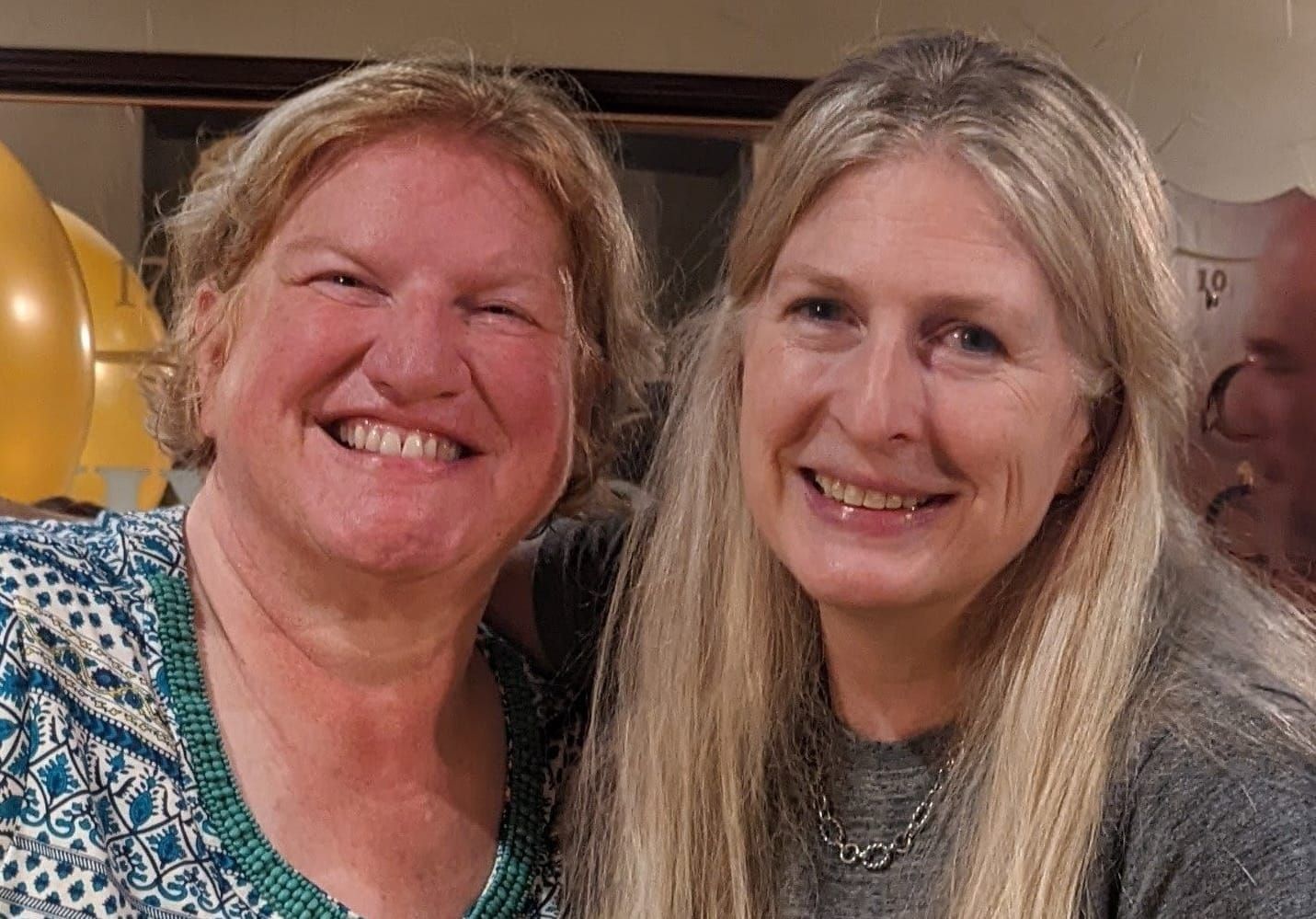
Tracy Barrett and Alison Bertolini are friends and colleagues at North Dakota State University. A peripatetic historian of Texan descent, Tracy acquired her eye for the absurd at the knee of her grandfather, a repository for generations of clan lore. She currently resides in North Dakota with her family and a small menagerie inherited from her children. Alison is a first-generation American stitched together from English rainclouds and Australian sunlight. She now haunts the northern plains with a stack of novels and an overdeveloped appreciation for crumbling mansions, suspicious attics, family sins best left buried, and emotionally unstable narrators. This is the first piece of writing that Tracy and Alison have co-authored.
Deathwork
Denise was 5 feet tall and probably 5 feet wide. She was married to my cousin, that was Linda’s son. None of us liked her; she was batshit crazy. She was the type that wanted to be buried in an $8,000 purple coffin lined with a lighter shade of purple velour: very Texas, if you know what I mean. When she died, her sisters were too cheap to buy the coffin. They planned a funeral to turn a devil into a saint. It was nearly all lies. They went on and on during the service about how she was such a good and God-fearing woman. My dad could barely contain himself.
The sisters decided on cremation, which upset Granny, who already has all of our plots chosen. The crematorium laid Denise out on a plank for the viewing (the idea was to go straight from the funeral service into the oven); then, they surrounded her with flower arrangements so elaborate that only her face was peeping out. It was a real spectacle, and my dad said to me later that all she was missing was the apple in her mouth. He snapped a photo and for years after, it was passed around the family. Yes, extremely bad taste, I know, but we all had a good chuckle thinking about the apple.
We knew Aunt Linda was sick for a while. She looked terrible and felt worse, but the doctor kept telling her it was a sinus infection and treating her with antibiotics. She was in and out of the hospital until I told my mom to get her an ultrasound. I mean, if all her symptoms were in her throat and lungs, a sinus infection didn’t make sense. When they finally did an ultrasound and bloodwork, the results came back that she had an advanced stage of lung cancer that had metastasized. 24 hours after the diagnosis, she was in a coma.
We flew down to Texas to join mom, dad, and Granny (who’s 94 now), in the ICU, but Linda was not doing well. The next morning, Linda’s sisters arrived. We were crowded in a tiny room in the ICU with Linda in bed in the center. Mom, Granny, and the sisters were having a deep conversation about the passage of time and the cruelty of aging while I stood at the foot of the bed watching Linda breathe. She had been breathing funny the whole morning in this rhythm of two breaths, then a long pause, then two more breaths. I was watching her chest rise and fall, rise and fall, until eventually her chest just stopped rising. This was right in the middle of the conversation happening beside me, and I started freaking out. They were having a meaningful moment of connection beside a corpse. Should I interrupt them? I couldn’t get a word in to begin with, so I started panicking. Finally, I caught my mom’s eye. She is usually pretty good in these situations, calm and level-headed. I gave her a look and inclined my head toward Linda. She took one look, then jumped up, ran into the hallway and screeched for help. Honestly, that was not helpful. Anyway, the nurses came running and confirmed that Linda was gone.
Linda had a directive stating that she wished to be cremated, but no arrangements had been made at this point, so we had to wait hours for the people to come and take the body. Meanwhile, Granny was looking more and more distraught. Finally, she grabbed me by the shirt, right up near my face, and told me we needed to talk in private. She marched me into the hallway (she’s strong for an old person) where her face collapsed. She was sobbing and crying and couldn’t get a word out. I kept repeating, “Whatever it is we’ll figure it out, Granny, I promise, it will be ok,” and I led her to a bench down the hall, away from the doorway to Linda’s room, because the last thing the family needed was to hear this. I assumed Granny was upset that Linda wanted to be cremated instead of buried, so I tried to explain. “She clearly states in her directive that she wishes to be cremated, it’s what she wanted, Granny.” Granny sobbed a good long time until she was finally able to speak.
“Do you remember Denise’s service?” Granny wailed, “When her face was surrounded by all those flowers?” I nodded. “What happened to the head?” I made her repeat the question, once, then again. “I saw the photo of her head!” wailed Granny. “From her service!” It eventually dawned on me that Granny was under the impression that cremation only took place for bodies. Just the bodies.
I tried to explain. “Granny, no, that photo was taken before the cremation! They cremated her entire body, including her head. Not just from the neck down!”
She insisted I was wrong, crying “what happens to the head?” so many times that I started to wonder myself.
Since I was getting a bit frantic at this point, I grabbed Mom, who was on the way to the restroom. “It’s the entire body, mom, right?” I insisted.
“They cremate the entire body including the head! Tell her, Mom.” I tried to get Mom to back me up, and then Dad, as he rounded the corner looking for all of us. Dad immediately started losing his mind, going on and on (loudly, if I’m being honest), about the body and the purple coffin, and the irresponsibility of the person who took the photo of Denise’s head at the viewing.
“Of course the head was cremated and was part of the ashes,” he ranted, threatening to break the photographer’s kneecaps.
Mom started quoting the Bible to calm the old lady. “Ashes to ashes and dust to dust, just like the Bible says” she hollered over top of the commotion dad was causing.
Granny seemed convinced for a moment, until the ICU nurse, who had hustled down the hall to check on us, chimed in, “I hate to tell you this, sir, but there’s no way to know if the ashes contain the head or not!”
“Well, that’s the truest statement I’ve heard all day,” said Granny, chastened.
Well you can imagine the hubbub that ensued. Mom and Dad protesting and cursing respectively, Granny in tears once again, the nurse looking indignant and judgy, and me waving my hands around and trying to hush them all, as if that would help. Up and down the hallway doors were being firmly closed by folks at their loved ones’ bedsides.
Finally, in desperation, I changed tactics. “Don’t you need to call Twyla to let her know about Linda?” Twyla is Granny’s long-time best friend and roommate at the Home.
Granny took a deep breath and turned toward me at last. “Oh yes, I really need to call Twyla now,” she sniffled into her hankie. I helped her with her cell phone, while mom, also chastened, looked on. Granny had multiple numbers listed for Twyla, but only one was correct, so we scrolled through a few times together until we landed on the right one. I hit dial. The phone rang and I heard a voice on the other end that kept on and on without pause while every so often Granny tried to interject, “Twyla I need to tell you something.” More muffled talking, that went on and on. Finally, Granny shouted, “Twyla, stop talking.” More mumbling. “Twyla, be quiet!” Silence finally fell.
Granny told Twyla about Linda and then passed me the phone. I spoke to Twyla, who knew just about everything there was to know about me, while on the other end of the bench, Dad, finally silent, looked like he was thinking hard. Then his eyes began to shift back and forth in the way they did when he knew he was guilty of something awful. I knew he was finally remembering that he himself was responsible for that photo of Denise. For once, I was grateful for Granny's eyesight. She couldn't see him, and I didn't have to share.