Novella by Steve Wick
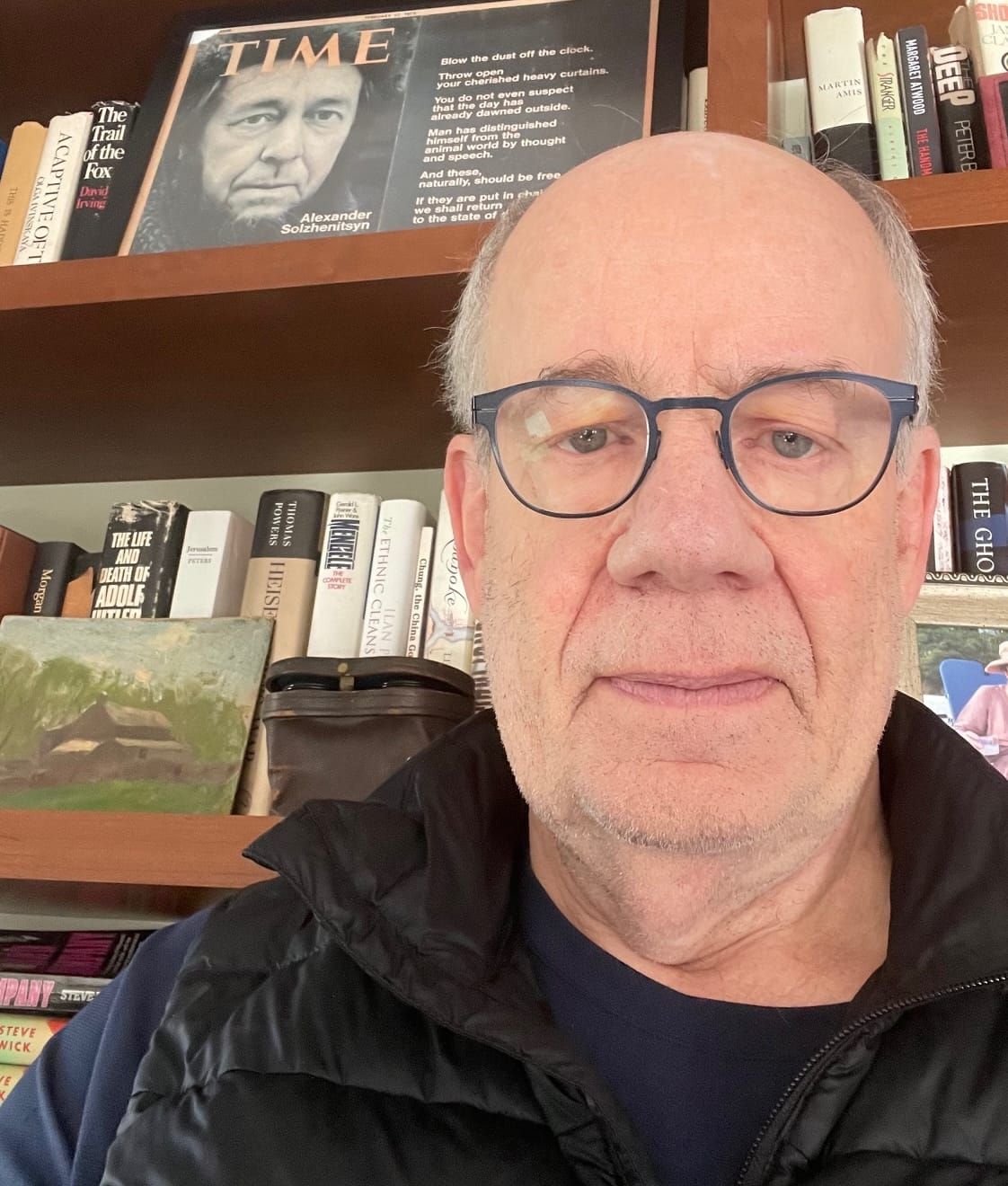
Porchlight is proud to continue the American tradition of serialization by offering a novella, Mr. Wilson by Steve Wick. Following is the third installment.
Steve Wick is a journalist and writer living on eastern Long Island. His stories about the last farm labor camp in the region ran as a series in Newsday, where he was a longtime reporter and editor. He shared in Newsday's Pulitzer Prize for Local Reporting for the newspaper’s coverage of the crash of TWA Flight 800. He is the author of four works of nonfiction and one novel, The Ruins, which was published in February 2025 by Pegasus Books.
While what follows is fiction, some aspects of the stories of the people and places are true, and are based on newspaper accounts, public records, family oral histories, and interviews conducted by the writer.
“There are years that ask questions and years that answer.” –-Zora Neale Hurston
Mr. Wilson
Had the commotion of people gathering their belongings not stirred him out of a deep sleep, Wilson would have missed the bus. He stood up, looking back at the seat as if in disbelief that anyone could have fallen asleep on it. He needed to piss – his side ached – but he was afraid if he went to the bathroom the bus would leave without him.
All I do is worry, he thought. A lifetime spent worrying about every little thing.
He lugged his pack, the strap of which was broken, out the door to the curb where the driver was directing passengers.
“Sir,” Wilson said. “Do I have time to go to the bathroom?”
The man looked at his watch. “Be back in five minutes, and you’ll be fine,” the driver said.
He was back in less than five. Clutching his pack, he climbed up the steep steps into the bus, and was grateful there was an empty seat near the front. He looked towards the rear of the bus. Everyone looked like him.
The bus pulled away in fits and starts, as the driver was having difficulty managing the clutch. Wilson felt fortunate he had the seat to himself; no one was immediately next to him. A younger man was in the seat across the narrow aisle.
Wilson closed his eyes and, in bright clarity, saw the young boy in the cemetery behind the Barwick church, clutching his grandmother’s hand tightly, feeling the soft warmth of her gloves, staring into a deep hole at the top of his mother’s coffin. He heard the sound of rocks and dirt striking the top of the wooden coffin as the workers began to fill in the hole.
He shook off the vision, vowed to stay awake so he would not be haunted by such scenes. Was it the going south that brought on these visions? They were so clear, so vividly alive.
Such a thing had never happened when he was living in labor camps on eastern Long Island. But now, in the state of Virginia, and going farther south, into the Deep South, his mind had taken on a life of its own, replaying for Wilson all that was unwelcome. His mind felt separate from him, out of his control. He feared as the milage piled on that the visions would grow more intense.
The darkness as the bus proceeded over bridges, under overpasses, alongside streams and around lakes and roadside businesses was so deep he could not tell where they were at any moment. Perhaps he had boarded the wrong bus and he was headed – where? Philadelphia?
He told himself he handed the ticket for Atlanta to the driver, and he punched a hole through it and handed it back.
No, no, he thought. This is the right bus.
Several times he got up and walked the aisle to the bathroom in the back. The last few rows of the bus were filled: men, women, children, older couples, single men and women. When he returned to his seat, he pulled the pack up and placed it on his lap and rooted through it until he found what he was looking for.
He held a tattered letter envelope. In the camp the day the letter had arrived, addressed to Wilson, Bea had looked at it and said it was from Barwick, Georgia. She asked if Wilson wanted her to read it. He wasn’t sure – a letter from Barwick? Just hearing the name of the town sent a shiver up his spine. She pulled out the letter and read slowly, then seeing Wilson’s reaction, read it a second and a third time.
Seated on the bus, Wilson laid the letter flat on his lap. He looked at the young man across the aisle, whose eyes were closed, his head tilted back against the seat. He thought of waking him and asking him to read it.
Included with the letter was the headline on part of a tattered page ripped from a newspaper. He remembered Bea reading the words to him, and he had forced himself to remember them. He heard the words in his head as if the speaker were standing over him and shouting them out, or Bea was with him in the kitchen of the labor camp reading the letter again:
NEGRO ATTACKS YOUNG GIRL IN HER HOME NEAR BARWICK YESTERDAY AND THREATENS HER LIFE WITH REVOLVER/ NO CONFIRMATION OF MANY RUMORS OF LYNCHING TODAY
It was several hours later, the bus still passing through the dark of night, that Wilson saw the young Black man to his right was awake and reading a sports magazine.
“Could I ask you to do something for me?” Wilsons said softly, aware that people in the seats behind him were still asleep.
“Sure,” the man said.
Wilson handed him the letter. “Can you look at the bottom? Near the name? What does it say?
He read, “I heard from a cousin of yours where you were living on Long Island. I knew your mother and grandparents. I believe I saw your father in the turpentine camp run by my uncle. If you ever return to Barwick, please come find me. I want to tell you what happened here.”
“Who signed it?”
“A man named Manley. He gives his address.”
The man handed it back to Wilson, who carefully folded it and returned it to the envelope and to the safety of his pack. He looked across the aisle and said, “Thank you.”
“Of course,” the man said. After several minutes, the man turned to better face Wilson. “Are you alright?”
“I’m fine,” Wilson said.
“Is this a long trip for you?”
“Yes. But I can do it. I look like I can’t do things, but I can.
“I didn’t mean to suggest otherwise,” the man said. “Are you from Georgia? This Barwick place?”
Wilson didn’t respond, not wanting to get into his personal history with another stranger.
“Did something happen in Barwick?” the man asked.
Wilson shook his head.
“Well, if you need any help,” the man said. “I’m sitting right here.”
Wilson smiled back at the man. “Where are you going?” he asked.
“Visiting my mother’s sister,” he said. “She’s in Georgia.” He extended his hand towards Wilson. “I’m David.”
Barwick, Georgia
Most nights when she wasn’t staying at the Pope’s to care for Mrs. Pope, Ada Wilson walked down Coffee Road from the brick home on Clifford Street and along the sandy path towards the Bradshaw turpentine quarters. Her son lived there, as did her mother and her mother’s husband.
Some nights Mr. Pope walked her home so he could talk about Mrs. Pope’s health, to speculate on what developments might come next, or to update Ada on his wife’s last visit to see Dr. Sanchez.
The simple act of walking was challenging for Mr. Pope. His left leg, from the knee down, was artificial. The act of walking was a delicate task, picking up the fake leg and carefully putting it down, and avoiding any unevenness in the path that could trip him up. He’d left the bottom half in a mountain of sawed off limbs in a field hospital in southern Pennsylvania.
For Ada, the walks, and Mr. Pope’s confidence in her, the way he spoke to her – he listened to her, he asked for her opinions - buoyed her spirits. She was his partner in an effort to help a woman and her family deal with an impending death.
Tonight, as she was cleaning up the kitchen, Pope said his wife was too sick for him to leave her bedside. So after fixing dinner for Mr. Pope and his son Olin, Ada took off her apron, folded it carefully, and draped it on the kitchen counter where she would pick it up in the morning when she returned to make breakfast.
She walked out the back door in the direction of the quarters. It was late afternoon, the air clear, warm and dry. She could hear the braying of mules in Mr. Chapman’s barn; voices coming out of the backs of houses; the hissing of gas lamps winking on as darkness descended.
In her thirties, Ada Wilson’s housekeeping job with the Pope family had taken her out of the fields and the quarters – row after row of shacks no bigger than chicken coops - on Roy Barwick’s farm. Beyond the radical change in work, the job offered a measure of hope. The symbol of that hope was her uniform. She cleaned it every night when she took it off. She wanted it to be spotless. She touched it up with the iron hot off the stove each morning. She wanted the creases crisp.
Wearing it helped her believe she might raise her son properly, provided the pieces fell together the way she hoped they would. Before she got too sick, Mrs. Pope had offered to pay any school costs for the boy. Even with that offer, Ada found it difficult, particularly with her husband Berry working in the woods and coming home only occasionally, to keep her boy in the one-room school for colored children that sat in a shed on the back side of Roy Barwick’s farm. Broken down desks, a stove for heat in the cold months, boxes of cast off books no one else wanted.
Her boy came up the path to greet her. Behind him in uneven rows were dozens of shacks all built the same, with one room, a straw bed, a wood-burning stove, a cooking area, and no running water. Outhouses sat on stumps scattered around the quarters. Ada smelled food being prepared. She stepped across the railroad tracks that divided the quarters and reached the shack.
“Hello, Mr. Shadrack,” she said. “How you doing today?”
He nodded, smiling, rubbing his right hand, with its bent and gnarled fingers, over the top of his head.
“Oh, I’m doing fine, Miss Ada,” he said in a voice that was scuffed and faded. With great effort he pushed himself up off the step.
He was short in stature, with a stout, muscular body, strong, broad shoulders, and large hands. His face was angular and bony. She looked at him, and she knew he was very old, tired and weak. Some mornings he could barely walk across the yard to the commissary to buy chewing tobacco. He was her husband’s father. She’d married Berry Wilson after Shadrack had married her mother, Julia Bradley, who became Julia Wilson. As she explained it whenever asked: the son married the daughter, the father married the mother.
While her grip on dates and key events was weak because so little was written down or even known, Ada could only guess on the particulars of family history. Clues were distant signposts on a sparse landscape. No paperwork of any kind existed. Nothing spoke to even a partial biography. No parents’ names, not a mother or a father, no siblings, no birthplace, no dates written in a family bible. It was as if they never existed.
She had enough of a grasp of the past to know – in spite of how little was ever talked about – that many men and women in the various quarters in Thomas and Brooks Counties had been owned. The word owned raised the hair on the back of her neck. Shadrack had once told her he remembered young white men going off to fight, leaving behind thousands of enslaved men, women and children.
Ada had a better grasp of her mother’s history. She knew she had been born in a shack on a plantation in Boston, Georgia. She had come to this conclusion based on the name of the northern family that her mother said had bought the land where she lived, and her mother’s one clear statement on her past, offered freely, that young, crippled white men were present and seen everywhere. Ada also knew there were white Bradley’s and black Bradley’s.
Julia Wilson had told her daughter, several times in the presence of Ada’s son, that her boy was born free. No one had ever owned him. He was different; not like the rest of them.
Mrs. Pope, who had a grasp of local history and family names, told her the white Bradleys had originally come from Virginia with their slaves and bought huge tracts of land in southern Georgia and northern Florida once the Indians had been forcibly pushed out.
A Junius Bradley owned 14,000 acres of land and hundreds of slaves in Jefferson County, Florida, over the state line, and Mrs. Pope told Ada her people probably came from there.
Richard Bradley once spoke of his mother, Ann Bradley, telling him she was brought to south Georgia from Virginia in a caravan of wagons filled with slaves, young and old, many of them African born and speaking languages she could not understand. Ann Bradley remembered seeing Indian children by the cart paths begging for food.
Ada knew it was best to mind her own business on matters of personal history. It was enough to know her son Jimmy had not been owned early in his life. She wondered how the knowledge and weight of it would touch his life as he grew older.
Gas lamps glowed in the shanties, first one, then another, like clusters of fireflies on a still night. Ada heard a woman’s voice, a child’s playful scream, screen doors banging shut, a man calling out for a woman. These quarters, owned by Mr. Bradshaw, were different, smaller, less chaotic and more settled, than the vast assembly of farm worker shacks on the back side of Roy Barwick’s where she was living when she met Berry and where her son was born.
She allowed herself the hope that sometime in the next few days, as work in the turpentine woods shut down for the winter, she would see Berry again. She had not seen him in over a month, and besides, nothing at all was within his control. When Berry could get away, he had to find his way back to Barwick, and then turn around again, making sure not to catch a white man’s attention and be accused of vagrancy and be sent to another turpentine camp to work off his punishment.
Ada dropped off some collard greens, along with a bag of potatoes and onions, on Shadrack’s front step, and walked around a half dozen other shacks deeper into the quarters. She passed a mule barn, the wood sheds, smoke house, commissary, the cooper’s shop, and the big still for processing tree sap into turpentine. An old woman was home alone, and Ada had been looking in on her in recent days ever since the woman’s husband had died of lock jaw.
While Ada walked off into the darkness, Julia Wilson proceeded along another well-worn path that brought her from the church on the far side of Barwick back to the quarters. The boy saw her before she saw him.
Shadrack had stopped working in the woods when he got too old. Huge saws cut off hands and arms, trees fell on men, killing or crippling them. Falling trees crushed equipment. If you got cut and it became infected, you died slowly in a shack, wailing like a child, your mouth locked up as if bound by wire. Several times a year convicts would show up in chains standing in cages pulled by mules.
Shadrack now worked for Mr. Chapman, who had a peanut warehouse up the street from the quarters. He also bought and sold mules.
Shadrack Wilson stood up to greet Julia Wilson. “What you waitin on, Mr. Shad?”
“Ada was by,” he said.
“She coming back for supper?” Julia asked.
“Said she would,” said Shadrack.
“You feeling okay?”
“I’m fine, Miss Julia,” he said.
This day was Julia’s birthday. She was puzzled each year when her birthday came around, just as she was puzzled as to how old she was. She had never known the day or year of her birth, nor did she understand why this day of all days had been picked by her mother.
Her brother Richard’s birthday was a different day and year but in the same month. She had no understanding of the mysteries of the calendar, and nor did her mother. They knew major holidays and seasonal events, and like most everyone in the quarters and plantation quarters they lived in, randomly picked dates for major events in their lives.
Several months after Ada’s birth, Julia chose the Fourth of July as her daughter’s birth date, as she knew it was a festive holiday celebrated by the whites.
Julia picked up the bag her daughter had dropped off and went inside and began preparing a birthday dinner. She knew her grandson loved warm biscuits.
\As she prepared dinner, Shadrack came in and sat on a stool by the stove. Jimmy stood by the door, watching his grandmother while looking outside for his mother.
“How’s Mr. Chapman today?” she asked.
“Oh, fine, fine.”
“What he havin you do, Shad?”
“Feeding the mules, cleaning the stalls.”
“You like them mules?”
“Some of ‘em!” They both laughed.
The boy watched his grandmother. He smelled the biscuits in the oven.
In earlier years, Shadrack, a widower, lived in the Roy Barwick quarters, along with two of his sons, Arthur and Charlie, and his four daughters, Lula, Florrie, Mamie and Laura. Laura’s birth had killed her mother. Living in another shack in the same quarters were his son Berry, his wife Mattie, and their one-year old son, Willie.
In the same ramble of shacks, Shadrack met Julia, who had been living for several years with a man named Johnson Rogers, who was the father of her daughters Lucinda, Hattie and Leah. But not her daughter Ada. Johnson Rogers had been killed when a saw in one of the turpentine camps cut off both of his arms at the elbows. They wrapped him in burlap after stretching him out on a cooling board, then buried him in the woods in a box lined with feed sacks.
Julia and Shadrack married. Two years later Berry Wilson married Ada. Both couples had a man fill out a page in a thick book in the Thomas County clerk’s office. Neither Julia, Shadrack or Berry could sign their names. Ada signed her name.
James Wilson was born on the day when fireworks exploded in the night sky over Thomasville and a marching band paraded by the courthouse as the locals celebrated a new holiday honoring Jefferson Davis. Men in gray uniforms lined the streets, some in wheelchairs or hanging on to crutches.
When Ada returned, Julia put dinner on the table.
When Wilson awoke on the bus, he was frightened. The bus had stopped. It was empty but for him. He stood up, dizziness forced him back into his seat.
Standing up again, he grabbed his pack from the rack above his seat and exited the open door of the bus. Bright lights shone inside a bus station. He walked inside. He didn’t know what state he was. Nearly all the seats were taken up with passengers.
He looked for a clock on the wall and saw the big one by the ticket counter. It was 4:30 in the morning. David was seated on the far side of the room, next to an elderly woman. He waved at Wilson, got up from his seat and walked towards him.
“You were sound asleep when we stopped,” David said.
“Where are we?” Wilson asked.
“North Carolina,” David said. “Next stop is Charleston, then on to Atlanta. Where are you trying to get to, exactly?”
“Southern Georgia. Thomasville would be the closest to where I want to end up.”
“You’ll stop in Valdosta, then,” David said. “That’s where we get off.”
Wilson needed a bathroom. He pushed past David and wound his way around the seats and peoples’ legs to the men’s room. It was next to a mop closet and a water fountain with the COLORED sign over it.
In the bathroom, he stood at the sink for a moment, waiting on hot water that never came. He splashed cold water on his face and stood at the urinal, not looking down this time. He didn’t need any confirmation that his urine had not cleared up on its own. The ache on his right side confirmed that.
When he came out, David was waiting on him. “I’m going to walk up the street to a food place and get something for my mother and me. Can I get you something?”
“Oh,” was all Wilson could manage.
“I’ll get some extra of whatever looks good and bring it back.” He waited a minute. “What’s your name, sir?”
“Wilson,” he said.
“Ok, Mr. Wilson. I will pick up something for you.”
A half hour later, David returned with two paper bags of food. He took one to his mother, who laid a napkin across her lap. David took the second bag to Wilson, who had found a seat in a corner by the door facing the bus parked at the curb outside.
Wilson reached into his pack and pulled out his envelope of cash.
“No need for that, Mr. Wilson.” David returned to his seat next to his mother.
When Wilson heard the driver shout, “Gather up your belongings and return to the bus,” he closed up the paper bag, grabbed his pack, and walked outside. There was light in the eastern sky, a hint of the day to come. He climbed up the steps and returned to the same seat as people filed down the aisle past him.
David escorted his mother to a row of seats in the middle of the bus and took one next to her. Wilson was alone in the first two rows. The bus driver climbed up into his seat and pulled the doors closed.
“We’ve got stops before Atlanta,” the driver shouted out, looking in the mirror that hung over his head so he could see passengers in the back of the bus. “It’ll be mid-afternoon when we get to Atlanta.”
Wilson retrieved the letter with the newspaper headline from the envelope in his pack. He spread the letter out on his lap. He wished David was seated next to him so he could ask him to read the whole letter.
This Mr. Manley knew my mother and father? he thought.
Bradshaw Turpentine Quarters
Shadrack walked back to the quarters after working for Mr. Chapman. He stopped to talk to a group of men who had gathered along the railroad tracks. As he stood talking, trucks filled with armed men and boys sped down Coffee Street towards Thomasville. He turned towards home, walking as fast as he could.
“What they saying, Shad?” Julia asked when he reached the quarters. She stood by the front door with Jimmy. “All I hear is they looking for somebody, and they find him he’s gonna get lynched.”
“Talk is someone went into a house and tied up a little white girl,” Shadrack said. “Family’s name is Scales. You know their place? Behind the Barwick farm a mile or so. Someone in her family found her and a posse got loosed. They going everywhere looking for this man. Oh, Berry got to stay where he is this time.”
He went inside and Julia ushered the boy in and shut the door. A few minutes later they heard voices outside. Shadrick opened the door. A truck idled in front of the shack, the man at the wheel holding his shotgun out the window.
“Hello, sir,” Shadrack said.
“People might be coming through later,” the man said. “Y’all just stay here and don’t wander out nowhere. Understand? Keep to yourselves. Yella looking colored man come around lookin for a place to hide, you stay away from him, understand? Stay with your own people. Last place you wanna be is outside tonight.”
Julia came to the door, her grandson’s arms wrapped around her legs. “I got a daughter,” she said. “She works for Miss Bertha Pope. She’s walking home soon.”
The man said, “She be alright.”
Julia let out a low wail.
A Black man hanging from a tree brought out the crowds in Thomas and Brooks Counties. A few days before Christmas, Julia had hidden her children under a bed as a mob in Brooks County lynched four men all at once. The bodies hanged from trees until sheriff’s deputies cut them down, burying them in a hole near a garbage heap. For days Julia wouldn’t let her children out of the house. Johnson Rogers stayed hidden for more than a week in a deep patch of woods before he ventured home.
A woman told Julia the men had been accused of knowing a murderer. A lynching a few years before on the Thomas County side was over a supposed rape. A few years after the four were killed, another man Julia knew, Renny Jefferson, was lynched. The charge was that he tried to rape someone. No one believed it. The same woman told Julia white men were always looking for any excuse to hang a Black man so a crowd could gather and pictures taken they could sell as postcards.
For years Julia remembered the names of the four – Samuel Taylor, Eli Frazer, Samuel Pike, and Henry Sherod. She knew Frazer’s sisters and their mother. Word reached Julia that a pregnant black woman had been lynched alongside two men.
“Mary Turner was her name,” the neighbor said. “Six, seven months along, supposedly. It don’t seem possible.”
“What she do?”
“Talked back to a white man,” the neighbor said.
“They hate us so much.”
When Ada arrived at the shack, she found Mr. Truesdale, the man who helped manage the quarters and the turpentine business, talking to a group of people. He had newspapers folded under his right arm.
\“I’ve got some news,” he said. He unfolded one of the newspapers and read from it.
“Reports from Thomas and Brooks Counties, near the Florida line, indicated that a Negro who was alleged to have assaulted a young white woman in Thomas County Monday afternoon had been lynched near Pavo. The Negro was captured twelve miles from Pavo and taken to the home of the young woman, where he was identified. The posse then started with the Negro to the Pavo jail, but the prisoner had not arrived there at midnight.”
He pulled a second newspaper from under his arm.
“The Thomasville paper’s got another story entirely,” he said. “It says they don’t know if this Negro was lynched or not.” He read: “Several Negroes in the northern end of Thomas County, and in the western section of Brooks County, were taken before the young lady near Barwick, who was barbarously assaulted, for the purposes of identification. None of those who were brought before her are guilty, as far as her statement goes. Many posses are out, and all who answer the description are taken to her for the purpose of identification. The lurid dispatches that emanated from Macon in effect that the Negro was lynched are pure myth, as far as is known here.”
He continued: “Last night a Negro that might answer the description was brought to Thomasville and put in the city barracks. Some folks came to town to see about his identification. Chief Milton and Sheriff Rehberg got together and the Negro was taken from the barracks, and when last seen was being transferred to a big car at the courthouse from the sheriff’s car, and with the sheriff and the chief, went very rapidly out Broad Street toward Albany. It was reported from Pavo that a Negro had confessed and was being pursued by a mob, the officers making an effort to elude it and land him in some jail.”
AUTHOR’S NOTE
The residents of a farm labor camp on the North Fork of Long Island were the focus of reporting I did for Newsday. The camp was the very last of its kind and was home to Black men and women who had long been separated from their southern birth places and families. James Wilson was one of the residents of that camp, as were Bea, Oliver, Frank, and Clara.
When the camp was shuttered after a disastrous fire, these people had to find new lives. Some went South; others had long lost any connection to where they were from. Bea was murdered by a man who broke in her apartment. Mr. Wilson, who had been a farm laborer since he was in his teens, refused to return to where he was born, in Barwick, Georgia. He died of a heart attack, never having ventured south to find his beginnings, or the ground where his mother was buried.
Those stories, and a series of photographs taken by Viorel Florescu, were compiled into a book called All That Remains, published by the Cutchogue-New Suffolk Free Library in 2024.
The story of the arrest, trial and acquittal of Ralph Wilson is told in newspaper accounts in Thomasville, Georgia.