Novella by Steve Wick
Porchlight is proud to continue the American tradition of serialization by offering a novella, Mr. Wilson by Steve Wick. Following is the sixth and final installment.
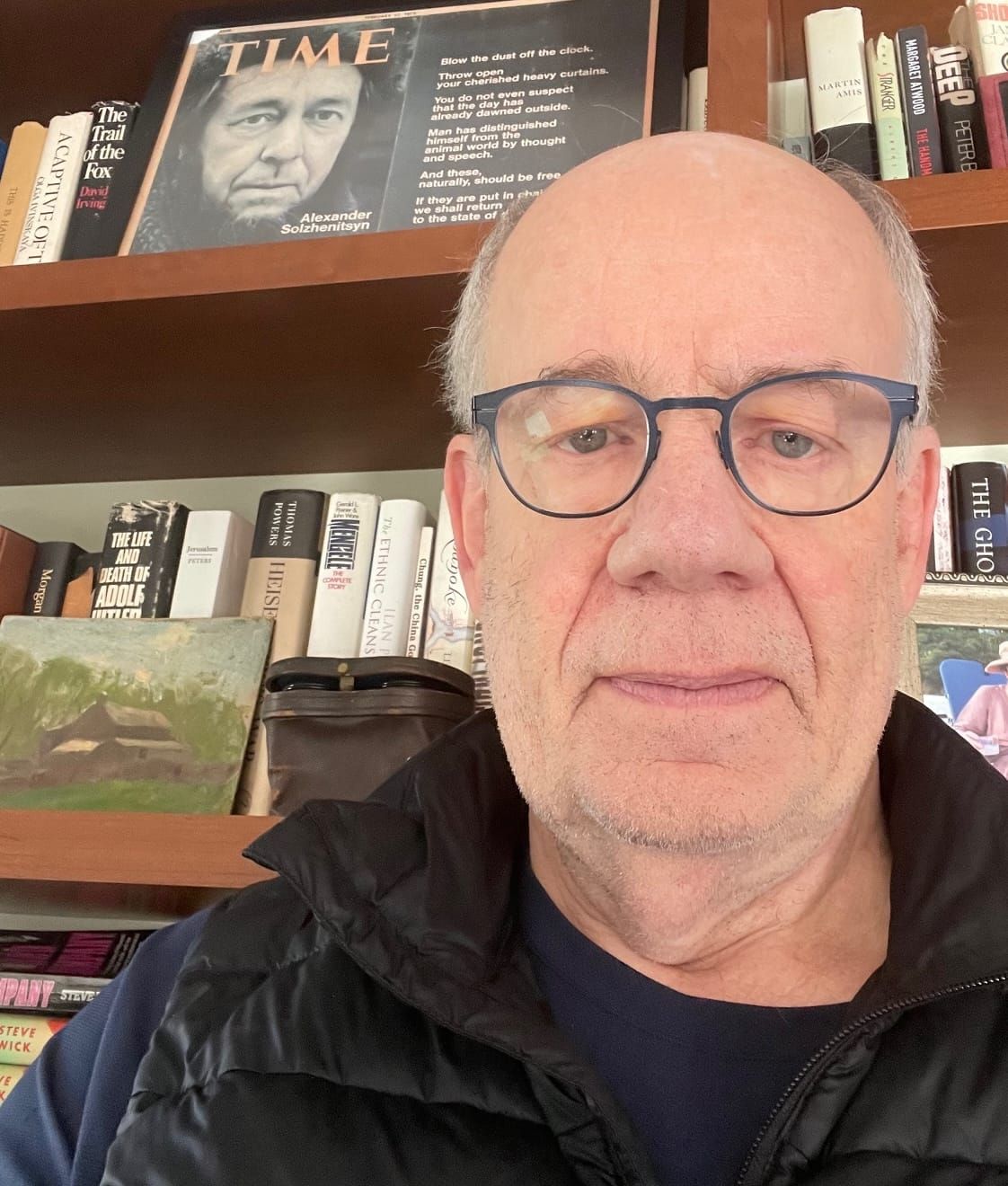
Steve Wick is a journalist and writer living on eastern Long Island. His stories about the last farm labor camp in the region ran as a series in Newsday, where he was a longtime reporter and editor. He shared in Newsday's Pulitzer Prize for Local Reporting for the newspaper’s coverage of the crash of TWA Flight 800. He is the author of four works of nonfiction and one novel, The Ruins, which was published in February 2025 by Pegasus Books.
While what follows is fiction, some aspects of the stories of the people and places are true, and are based on newspaper accounts, public records, family oral histories, and interviews conducted by the writer.
“There are years that ask questions and years that answer.” –-Zora Neale Hurston
Mr. Wilson
Thomasville, Georgia.
Heavy footsteps on stairs. Steel doors banging shut.
The noise awakened him. He jerked up on the bed and waited for the far door to open, then an inner door, and for the fat man in the food-stained uniform to appear at his cell.
This time the man walked by his cell, down the narrow, dark hallway to the last cell. Since his arrest on November 29, Ralph Wilson had come to know all the jail noises: the meal cart with its rusty iron wheels; the wheezing of the guard with the clipboard who checked names every few hours; the ring of keys that hung from his belt jingling musically; the shuffle of the fat guard on the concrete floor.
As the man and his chained prisoner walked by the cell, the guard looked in and said, “You up, Wilson?”
“Up, sir,” Wilson replied.
“Breakfast coming,” the man said.
“Thank you, sir.”
Cold grits, a biscuit, boiled coffee in a metal cup. He welcomed it every morning. Sitting on the bed, he tilted his face towards the pale shaft of light that came through the narrow slit at the top of the wall.
When breakfast arrived, he ate his grits and biscuit quickly and asked for more coffee. When he was done, he sat on the bed leaning against the stone wall until he heard the doors opening again. Standing up, he said to the deputy at his cell, “What’s going on?”
“Supposed to bring you to the courthouse,” the man said.
“What for?”
“You been indicted, Wilson,” he said. “That’s what one of the court officers said. Rape and assault for that little white girl in Barwick. You understand that, Wilson? They gonna put you on trial this morning. Before Judge Thomas.”
The man handcuffed Wilson through the cell bars. He had him turn around so he could place a locked chain around his ankles. After the door swung open, they made their way up from the dark basement, Wilson rocking awkwardly from side to side on a short chain.
When they reached the main floor of the courthouse they passed through a side door into the courtroom. Judge Thomas, white-haired and wearing a black robe and pince-nez eyeglasses pinned to the bridge of his nose, sat on the bench. A court officer removed the leg irons and handcuffs and escorted Wilson to the defense table, where two men in suits waited for him to sit down.
At this point Wilson turned around in his seat. He was happy to see, in the back row, Ada Wilson. She wore her Sunday dress, hat, and leather gloves. He knew the gloves well, as he’d gotten them from a woman he’d cut and stacked firewood for the previous winter. Her last name was Woodruff. A letter W was stitched to the top of each glove. That she and Wilson had the same first letter in their last names motivated her to give the gloves to Wilson when the firewood was neatly stacked alongside the barn.
Ralph Wilson gave them to Berry Wilson, who presented them to Ada.
Next to her was her son, his head peering over the top of the bench in front of him. The boy raised his right hand. The boy and his mother had come to the jail nearly every week since November hoping to see Wilson. In recent weeks they’d been escorted to a waiting room where they sat together and spoke in whispers about the case. Ralph Wilson loved seeing the boy, who never spoke but sat quietly next to his mother.
The judge’s comments, as reported by the Enterprise:
“Mr. Wilson,” the judge said. “The court has appointed these gentlemen to serve as your counsel. A grand jury has handed up an indictment charging you with rape and assault. Rape is a capital crime, Mr. Wilson. Mindful of this, the court has appointed two very able attorneys to represent you today in this courtroom.
“Prior to your arrival, Mr. Wilson, I heard a motion from the Solicitor General, Mr. Hay, and his assistant, Mr. Cheshire, to close the courtroom to the public. Mr. Austin and Mr. Merry, your counsel, have joined in this motion. As the charge involves a young girl and a salacious allegation, I have agreed to this request. I will only allow some immediate family of the alleged victim, law enforcement personnel, the jurors, of course, and two newspaper men I can personally vouch for. Any outburst will be dealt with in the strongest possible way.”
Two uniformed court officers stepped out of the well of the courtroom and walked to the rows of seats beyond the gate. With a wave of his right arm, one of the officers motioned for Ada Wilson and the boy to leave the courtroom. The two officers escorted the woman and boy out the double doors and into the hallway. When they came back in, they closed the doors. The two newsmen sat in the front row of seats.
Certain his instructions had been carried out, Judge Thomas turned his attention to Wilson.
“We are not the mob I have read you experienced last November; far from it,” Thomas said. “This is a court of law. The jury will determine your guilt or innocence. If you hang for this crime, it will be because of the jury’s verdict and my sentence, not because an angry mob has taken hold of you. Do you understand what I am telling you?”
“Yes, sir,” Wilson said.
“You seem like you have some education.”
“Yes, sir, I do. Miss Johnson’s school for the colored, right here in Thomasville. I went quite far.”
“You can read and write?”
“Oh, yes, sir, I certainly can.”
“You speak well for a Negro,” the judge said.
“Thank you, sir. We own land, too. About twenty-five acres near Barwick. We’re substantial people, your honor.”
“You will conduct yourself like a gentleman in my courtroom,” the judge said, holding up his right hand. “I require that of everyone.”
“I will be doing that, sir,” Wilson said.
Thomas nodded to the bailiff, who opened a side door to the courtroom. The jurors filed in, silently taking their seats. Standing before the bench, the bailiff called out, “Mrs. Scales to the witness stand.”
Through the side door and into the courtroom came a middle-aged woman with short, dark hair. She wore a long, formal dress, a white scarf draped loosely over her shoulders. Wilson watched her pass through the gate and approach the stand, where the bailiff held up a bible on which she placed her hand and swore to tell the truth.
When she sat down, she fussed with the folds of her dress. Clearing her throat several times, holding her long, painted fingers up before her mouth, she looked directly at the prosecutor standing before her.
The mother’s story, as reported in the Enterprise:
On November 29, she walked to a nearby farm where her husband was putting a new roof on a barn. She recalled it was quite a warm day. She brought lemonade for the men. When she returned to the house, she called out for her fifteen-year-old daughter, who did not answer her.
“She had told me she would be home practicing her piano,” Mrs. Scales said. “I assumed perhaps she was on the front porch reading. When I walked through the parlor, I found her on the floor, tied up tightly, the rope around her neck. I untied her, and she was barely conscious. I ran for help and my husband and some other men arrived at the house.
“We sent for Dr. Sanchez in Barwick, who arrived perhaps forty minutes later. By then our daughter was speaking and awake. Dr. Sanchez examined her and said there was considerable evidence she had been attacked. She said she came into the house by herself, and found a Negro had followed her into the parlor.”
When she finished, the Solicitor General called the Scales girl as his next witness. A court officer escorted her from the side door entrance to the witness stand. She was small in height, with brown hair that fell to nearly to her waist. Her dress had soft, blue braid around the wrists and a high collar that reached to her ears. A blue ribbon was tied in a bow on top of her head, which gave her the appearance of a child dressed by her mother. As she walked by the defense table, she glanced at Wilson.
Hearing a commotion at the rear of the courtroom, Wilson turned in his seat to see the rear doors of the courtroom open and a court officer waving his right hand at Ada Wilson and the boy, telling them to move back from the door. The boy stood in the door, staring down the center aisle to the young woman on the witness stand.
After the doors were shut again, the court officer approached the bench and whispered something to the judge, who then motioned for the Scales girl to be sworn and to take her seat. She began speaking softly, a little girl’s voice. The judge asked her to speak up.
The daughter’s story, as reported by the Enterprise:
“I came home around 2 p.m., by my watch,” she said. “There was no one in the house, and I sat down and played the piano for a short while. I was distracted by a noise and I looked behind me, and there was a Negro there who had entered the room. He had a pistol and a rope. The rope was hanging off his arm.”
She did not recognize the Negro. He wasn’t one of those who worked for her father, she said. She knew the Negroes who worked for her father on their farm during the harvest, or came during the year for odd jobs, clearing land and cutting wood. She knew of Negroes who lived in quarters on other farms in the area, and others from the turpentine quarters around Barwick and Thomasville who she’d seen walking the paths behind her family’s farm on their way to their church in Barwick.
This Negro was “yella,” she said, saying it twice, the second time pronouncing it “yell-OH,” with all the letters. Light skinned. He wore brown pants, leather leggings, and a dark shirt like he’d just come from field or turpentine work.
Hold up your hands or I’ll kill you, he told her. She ran for the door but he caught up with her. He dragged her to the floor by her hair, which was braided down her back as she often wore it. He tied a rope around her neck, and she very quickly passed out.
The Solicitor General walked to the stand holding a pair of trousers and a pistol.
“Are these the trousers he wore?”
She said she wasn’t sure.
“Is this the pistol?”
Well, she said, it could be. His pistol was shiny; that one seems rusty.
Positioning himself closer to the stand, the Solicitor General pointed to Wilson.
“Is that the man who attacked you in your home?”
I think so, she said, her voice dropping off.
Mr. Austin rose and asked her about her description of the assailant. She gave the sheriff all the details that day, she said.
“So, I ask you, as the Solicitor General has asked you, about my client, Mr. Wilson. You are not entirely certain this is the boy, are you?”
“It looks just like him.”
“It looks just like him?” Mr. Austin asked. “The way the colored do? Is that what you are saying, young lady?”
“Yes. Just like him.”
The Solicitor General called Mr. Ben Rogers to the stand. He spoke of going to A.J. Williams’ turpentine quarters and to the Bradshaw quarters in Barwick hunting for a Negro. At the Williams quarters he saw one of the Negroes give a package to Wilson, Rogers said. It turned out to be a shiny pistol wrapped in a handkerchief or a rag. The pistol was inoperative, as the hammer was missing.
“It was clear to me that in fact he was guilty. Besides, he was light skinned. He was guilty and acted guilty, you could see that. You know with Negroes when they’re lying. Dogs know when a Negro is lying, and I had my dog with me and he growled at Wilson the whole time.”
“You had considerable difficulty getting to the sheriff’s office that night after you left the Scales farm with your prisoner, sir? Is that correct?”
“Yes, sir. There were mobs out looking to lynch a Negro. We tried several roads before we found a way to get him to Valdosta. The deputies there surrounded the building to keep the mob away.”
“The mobs would have lynched Mr. Wilson, had they caught him?”
“Oh, yes, sir. Goodness, yes.”
“Besides him acting guilty and being yellow, what else did you have to justify taking him into custody that night?”
“To add to the considerable mountain of evidence, we found two handkerchiefs in Wilson’s shack at the Williams’ quarters that Mr. Scales positively said had been taken from a trunk in their home. That pretty well did it.”
The state’s case ended when the Solicitor General asked the judge to hold Dr. Sanchez in contempt for refusing to come to court and testify for the prosecution as to the facts surrounding his examination of the victim. The judge said he was surprised, as Sanchez was a good citizen of Thomas County. He had no choice but to fine him.
Addressing the jury, the judge said, “You are not to draw any conclusions as to why Dr. Sanchez, who examined the girl, declined to participate in this trial.”
Mr. Austin began calling his own witnesses. Several said they knew Wilson very well and had seen him at various times that day. They said it was impossible that he had been anywhere near the Scales farm that afternoon. Sam Wilson took the stand and said Ralph was his son’s nickname. His actual name was Ladd Wilson.
He went through the day in question and testified to all the times he had seen his son. He said they had dinner together at 1 p.m. and then went to Mr. Tom Bradley’s house. Mrs. Bradley went further and said she saw Wilson in her home between 1 and 2 p.m. Ernie Wilson, a Negro school teacher, testified that he saw Wilson at 3 p.m. That took care of the hours when the Scales girl said she had been attacked in her family’s home.
Mr. Davis, who lived five miles from the Scales home, told the jurors Wilson walked by his house at 3 p.m., and they chatted for a few minutes. Mr. Davis’ son said he saw Wilson at 3:30 while he was picking up wood in a field near their home. Matt Wilson and Herman Wilson, father and son, both testified that they saw Ralph Wilson at 4 o’clock that very day.
The next witness was Mr. Rehberg. He talked about the clothes the girl said the Negro wore. The leggings he wore strongly suggested he did carpentry or turpentine work, so he said he first went and got one of Mr. Roy Barwick’s Negroes, a light skinned one, and the girl said she was sure that was the man who attacked her. But when Rehberg went and talked to Mr. Barwick, he said that man couldn’t be guilty because he was with him all day in the woods or in the quarters at the end of the dirt road near the Barwick house. So that man was turned loose.
Ralph Wilson’s story, as reported by the Enterprise:
Mr. Austin led him to the stand. He took the oath and sat, confidently crossing his legs, looking over at the jury to see they were all staring at him. The next morning, standing in the colored section of the Greyhound bus station in Albany, Georgia, waiting on a bus going north to Memphis and on to Chicago, Wilson saw the front page account of the trial in the Enterprise.
In a low voice so as not to be heard by everyone around him, he read the story out loud.
“The Negro then went to the stand. He was about five feet, three inches tall, yellow in color, wore an over-all jacket, a pair of high shoes, and trousers that closely resembled dark olive drab Army trousers. He told of his doings that day, being at Mr. Williams’ camp in the morning, his father’s house later and working until twelve, going back to his father’s for dinner. Then to Mrs. Bradley’s, then to Mrs. Davis’s and a sugar building a short distance away, and the Bradshaw turpentine quarters. He was very composed and seemed to regard the matter with little anxiety one way or the other. His way of speaking was not at all nervous, his voice ordinary in tone.
“The State’s case was closed by Mr. Hay, who pointed to the corroborating evidence of the pistol, and the handkerchiefs, and the girl’s statement. He said there was but one conclusion, guilty or innocent. If guilty, the Negro ought to hang, there being no other penalty that could be devised that would meet the ends of justice.
“After Judge Thomas read his charge, the jury was retired. They reported a verdict in ten minutes and slowly filed into court. Every person was told to sit down and to remain calm until the sentence had been read and the defendant was taken from the courtroom. The verdict was read: ‘We the jury find the defendant not guilty.’
“There was absolute silence and special deputies and court officers escorted the Negro from the building and a waiting auto carried him out of the city, where he was immediately freed from custody.”
Manley and Wilson walked out a back door to another porch, where Mrs. Webster pointed out the woods in the distance. She told the same story Manley told: there are well traveled paths through the woods that led to a Black Baptist church.
While they stood there, Wilson holding on to the railing of the porch to steady himself, church bells rang in the distance.
Manley brought Wilson back to his house, where Wilson used the bathroom and washed up. Audrey made a lunch of crackers and tomato soup. They sat on the house’s porch, overlooking the empty shacks of the Bradshaw turpentine camp.
Wilson dipped into the soup with little enthusiasm.
“We have another stop, Mr. Wilson,” Manley said.
Wilson raised his hand in protest. “I can’t do that,” Wilson said.
“I’ve read all the stories about the Ralph Wilson trial,” Manley said. “The jury acquitted him, which has to have been a first here. The last paragraph of one of the stories says a sheriff’s deputy, after the acquittal, put him in a car and drove him out of the town and dropped him off and told him to never return.”
“I don’t know that name,” Wilson said.
“What happened here, Mr. Wilson, happened on my family’s land,” Manley said. “I wanted to find you, if that was possible, to talk about this.”
It was later in the afternoon, after Wilson had returned to Mrs. Young’s house for a nap, that Manley picked him up and drove him two blocks to a small, brick home on Clifford Street. While Manley got out of the car, Wilson lingered for several minutes before he opened the door and pulled himself out and onto the curb.
“Let’s go inside,” Manley said, trying to encourage Wilson to leave the safety of the car and move towards the house.
A uniformed woman answered the knock and opened the door. “Good afternoon, Mr. Manley,” she said.
“Mrs. Thomas, this is Mr. Wilson,” Manley said. Both men stepped inside.
“Hello, Mr. Wilson,” she said. “Mr. Pope has told me about you and your family.”
The feeling of belonging, of knowing this place, spread through him. He’d been in this house before, and when he came through the door, a sitting room on the left, with a fireplace surrounded by overly stuffed bookshelves, he knew it was true.
Mrs. Thomas escorted Manley and Wilson through the kitchen – where Wilson saw a neatly folded housekeeper’s uniform on the counter – and through to a porch. Olin Pope was seated in a recliner, a stack of books next to it, one open on his lap.
She helped Pope rise up in the chair.
“Hello,” Pope said. “Hello, Mr. Manley. Is this Mr. Wilson?”
“Yes, it is,” Manley said.
He pointed to comfortable chairs around a coffee table, which was also stacked with books. “I’ve been reading a biography of John C. Calhoun,” Pope said. “Certainly a man of his time.”
“Very glad to see you are engaged,” Manley said.
Wilson asked if he could use Pope’s bathroom. Mrs. Thomas showed him where it was. She brought him back to his seat when he was finished.
“My father and his three brothers went off to war to fight the federal government,” Pope said. “Only my father came back, missing part of one leg. My mother’s family had a plantation east of here and lost it all when Sherman roared through Georgia. They never recovered.
“I’m telling you a bit of my family’s story, Mr. Wilson, and will get to what Mr. Manley and I have been talking about, and how your family story kept coming up.”
Wilson remained silent.
Pope called out to Mrs. Thomas, who came in from the kitchen. “Could you get for me the framed photograph of my family that’s on the mantle over the fireplace?”
She went and got it and handed it to Pope. Manley looked over Pope’s shoulder, as did Mrs. Thomas. It showed a group of people around a woman sitting up in a bed, her back to the backboard. Seated next to her was an older man, a cane across his lap. Standing next to him was younger man. On the opposite side of the bed, holding the hand of the woman in the bed, was a woman in her housekeeper’s uniform.
Pope handed the photograph to Wilson. He took it, stared at it, knew the boy was Mr. Pope.
“The woman in the bed is my mother,” Pope said. “We had a photographer from Thomasville come in. It was my mother’s final days, and she insisted on a family photograph. My father was a mess. She’d been diagnosed a year before. That year he could barely function, or keep the family businesses going and money coming in.
“The woman seated next to my mother is Ada Wilson, your mother,” Pope said.
Pope’s voice sputtered as he pushed the words out. Mrs. Thomas went to the kitchen and returned with a glass of water.
“She saved my family and my father. He was an old man when my mother died, but her death crippled him. The lost leg left in Pennsylvania and the bitterness had aged him worse. It was Ada, your mother, who helped us all get through it.”
Wilson pushed off the arms of the chair and walked to the front windows, which looked out over the street. His back was to Pope and Manley, and he held that pose for nearly five minutes before he turned around.
Mrs. Thomas came into the room and stood by Pope. “I have a brisket in the oven, with onions and potatoes,” she said. “There’s enough for everyone.”
She helped Pope off the chair and guided him to the dining room table. Manley and Wilson sat down opposite him.
“I do like a whisky with my dinner,” Pope said. “Would either you join me?”
Manley shook his head, while Wilson raised his hand to signal yes. Mrs. Thomas brought them both a glass with an inch of whisky in them. Holding the glass, Wilson remembered, when he was younger, how he’d mix milk with whisky because it was easier on his stomach.
Mrs. Thomas brought in plates with the brisket slices on them, and a bowl of roasted onions and potatoes. She went into the parlor and returned with the framed photograph and put it next to Pope.
Reaching up with both hands, Pope covered his eyes for a moment. “When momma was told by Dr. Sanchez she was sick, she asked daddy to talk to a man in Thomasville who had a photography studio. His name was A.W. Moller. I never understood why she wanted a photograph of her family. She knew she didn’t have that much time left. To her, it would a keepsake we’d all have for the rest of our lives.”
Pope helped himself to some potatoes. “And you can see, Mr. Wilson, the family included your mother,” he said. “Daddy was Wesley Franklin Pope. He was a cotton farmer who went broke. We had long cotton, not short cotton. He also had a grist mill and a cotton gin. He had a sawmill, too, and processed turpentine. The house at the farm burned after momma died. Daddy took is so hard. It felt like everything in his world was going wrong all of a sudden.
“I was there the day when a man knocked on the back door of this house.” He pointed to the back door. “My mother answered it. His name was Ike. We came to call him Uncle Ike. He came to the house looking for food. Momma fed him and let him stay in a room behind the kitchen. He was a hundred years old. He’d come back one day looking for the family that had owned him. My family, we owned no slaves. That might not mean anything to some people, but it means something to me.
“My grandfather was T.M. Massey. He walked home after the war. All the way from Virginia. Lots of men did that, you know. Just walked home from wherever they were when they heard the fighting was over. Arthur Massey was daddy’s uncle. He sold ice and caskets here in Barwick. T.M. Massey was the one who bought all the land. He had hundreds of acres at one time. We lost pretty much all of it. Then the rich people started coming down to hunt quail on our land. If I had their money, I’d give it to the poor.
“Miss Ada – that’s what we called your mother – was in the house one day. Momma was in bed sick. Daddy walked her down to the quarters. I went along. That’s when I saw you, Mr. Wilson. When daddy walked back, he said a white mob had come into the quarters looking for a man to hang. They got Ralph Wilson and nearly killed him but put him on trial. And he was acquitted.
“Dr. Sanchez saved his life. It’s true. He’d examined the girl at the Scales farmhouse. She kept saying she’d been attacked. Dr. Sanchez examined her and when it came time for a trial, he refused to come to court. He was fined. The jury realized what that meant, and they acquitted Ralph Wilson.
“A few months later, there was an announcement in the Enterprise that this Scales girl and her boyfriend had gotten married. It was all very rushed. Dr. Sanchez told my father the girl was pregnant when she claimed she’d been attacked. The boyfriend was the father. Her story nearly got Ralph Wilson hanged by the mob.”
“She must have panicked when she found out she was pregnant and invented a story,” Manley said. “It makes no sense at all. Of course, it all became clear when she gave birth, but by then they were in Florida.”
Manley reached into his coat pocket and pulled out Ada Wilson’s death certificate. He stared at it intently, then handed it to Pope.
“Daddy come home from the farm, and Miss Ada was so sick she couldn’t cook or do nothing. It had come on so sudden. Daddy took her to Dr. Sanchez. She stayed there in that little hospital he had in one of the beds. Daddy visited her every day. Then Dr. Sanchez sent word that she’d died. I went with daddy down to the Bradshaw quarters, and he sat with an old woman and you.
“Daddy took me to the burial. Dr. Sanchez was there. Mr. Bradshaw. You were there with your grandmother. Daddy was overcome.”
He looked over the death certificate. “It’s signed by Arthur Massey and Dr. Sanchez. Very unusual for both of these men to sign a death certificate for a colored woman. It says right here, Mr. Wilson, that Berry Wilson was dead by this time.”
He looked across the table at Wilson. “But that wasn’t true.”
Wilson stared ahead, his head fell nearly to his chest. He raised his hand again: stop.
Mrs. Thomas came in from the kitchen and stood next to Pope. Wilson’s hands shook. His food was untouched. She went to the kitchen and returned with a glass of water she handed to Wilson. Picking it up, his hand shook so badly he put it down. He tried again, and drank nearly all of it.
“I’ve not been well,” he muttered. “I shouldn’t have lasted this long.”
Dinner finished without any further conversation. Wilson could see Mrs. Thomas took her dinner in the kitchen. He got up to use the bathroom, and when he returned to the table, Mrs. Thomas was putting out slices of carrot cake.
“Mr. Pope,” Wilson said. “My father was alive?”
“You never knew what happened to him?”
“My grandmother took me to Florida to be with her brother, Mr. Bradley. Then she died. I got on a truck with other people and we went north to New Jersey. I never knew anything. I never wanted to be here. Or see this place again.”
“It was after your mother’s burial that two men came to the back door,” Pope said. “It was late in the day. Daddy opened the door. He didn’t know these men. The one man spoke. He said his name was Berry Wilson, and this was his cousin, Ralph Wilson. Both men had fled from one of the turpentine camps.
“Berry Wilson told Daddy he was looking for his son. Daddy told him he didn’t know what had happened to him. He asked about Miss Ada. He knew she worked here. Daddy told him she had died and was buried in the cemetery at the bottom of Kendrick Street. Berry Wilson didn’t know his wife had died. I stood at the door behind Daddy. This Berry Wilson kept saying, ‘I want to find my son.’”
“The newspaper accounts said Ralph Wilson was driven out of town and told to never come back,” Manley. “He must have been picked up and sold to one of the camps.”
“Daddy kept saying he didn’t know what happened, or where his son went,” Pope said. “Berry Wilson said he and his cousin were going to get a train and go north, to Chicago. He didn’t want to leave without knowing something.”
Wilson covered his face with both hands. Everything in his past, everything he didn’t know, was now before him. A teenage white girl ruined all their lives.
“Do you remember where Ada Wilson was buried, Mr. Pope?” Manley asked.
“It’s where daddy buried Uncle Ike. A field at the end of Kendrick Street. There used to be quarters down there they called Bookerville. Most of the people there worked for Roy Barwick on his big farm. When I was a boy, there were lots of shanties on that farm. The folks in Bookerville built a church there, and after the church there’s some flat land where their people were buried, before you reach the piney woods.”
“Did that church have a bell that rang?” Wilson asked.
“It was ringing the morning of Miss Ada’s burial. I saw you and your grandmother walking down the wooded path from the shacks on the Barwick farm to the church.”
After nearly five minutes of silence, Wilson said, “Can you take me there?”
“Tomorrow morning,” Pope said.
Manley dropped Wilson off at Mrs. Young’s house. The sun was down, the air warm and dry. She had waited dinner on him. He apologized and explained he had dinner at the Pope house. He wanted to go straight to bed, he told her.
Sleep was on and off. Morning arrived and, before he opened his eyes, he was convinced he had died. And that noise again: the thud of rocks and dirt hitting the top of his coffin.
He got out of bed, changed his clothes, the man next to him flat on his back, his mouth open, snoring so loud Wilson would have thought the house would shake. He quietly left the room. He put his shoes on at the kitchen table. Outside, the sky was brightening.
A woman up the street was walking her dog. He turned and began walking, away from Coffee Street. He passed several houses, a garage and a stable on one side of the road. He could see the church steeple in the distance, above the tree line.
When he reached the church, the voice in his head was talking to him. A low, slow voice, an ancient voice. Maybe it was Shadrack, he wondered.
He proceeded down a hill to a flat piece of cleared land, about an acre in size. Beyond that was a pine forest. There were no graves stones, just sunken sections of ground as if the earth had pulled down the land on top to scar it permanently.
Standing at the edge of the field, he could see the path through the woods that ran up towards the back of the Barwick farm. The sun was beginning to peak above the tall trees. Looking across the graveyard, there he was – a boy holding on to his grandmother’s gloved hand, standing over his mother’s grave.
He walked to that spot, his face tilted up to catch the warmth of the sun.
AUTHOR’S NOTE
The residents of a farm labor camp on the North Fork of Long Island were the focus of reporting I did for Newsday. The camp was the very last of its kind and was home to Black men and women who had long been separated from their southern birth places and families. James Wilson was one of the residents of that camp, as were Bea, Oliver, Frank and Clara.
When the camp was shuttered after a disastrous fire, these people had to find new lives. Some went South; others had long lost any connection to where they were from. Bea was murdered by a man who broke in her apartment. Mr. Wilson, who had been a farm laborer since he was in his teens, refused to return to where he was born, in Barwick, Georgia. He died of a heart attack, never having ventured south to find his beginnings, or the ground where his mother was buried.
Those stories, and a series of photographs taken by Viorel Florescu, were compiled into a book called All That Remains. It was published by the Cutchogue-New Suffolk Free Library in 2024.
The story of the arrest, trial and acquittal of Ralph Wilson is told in newspaper accounts in Thomasville, Georgia.