Poetry by Amy Le Ann Richardson
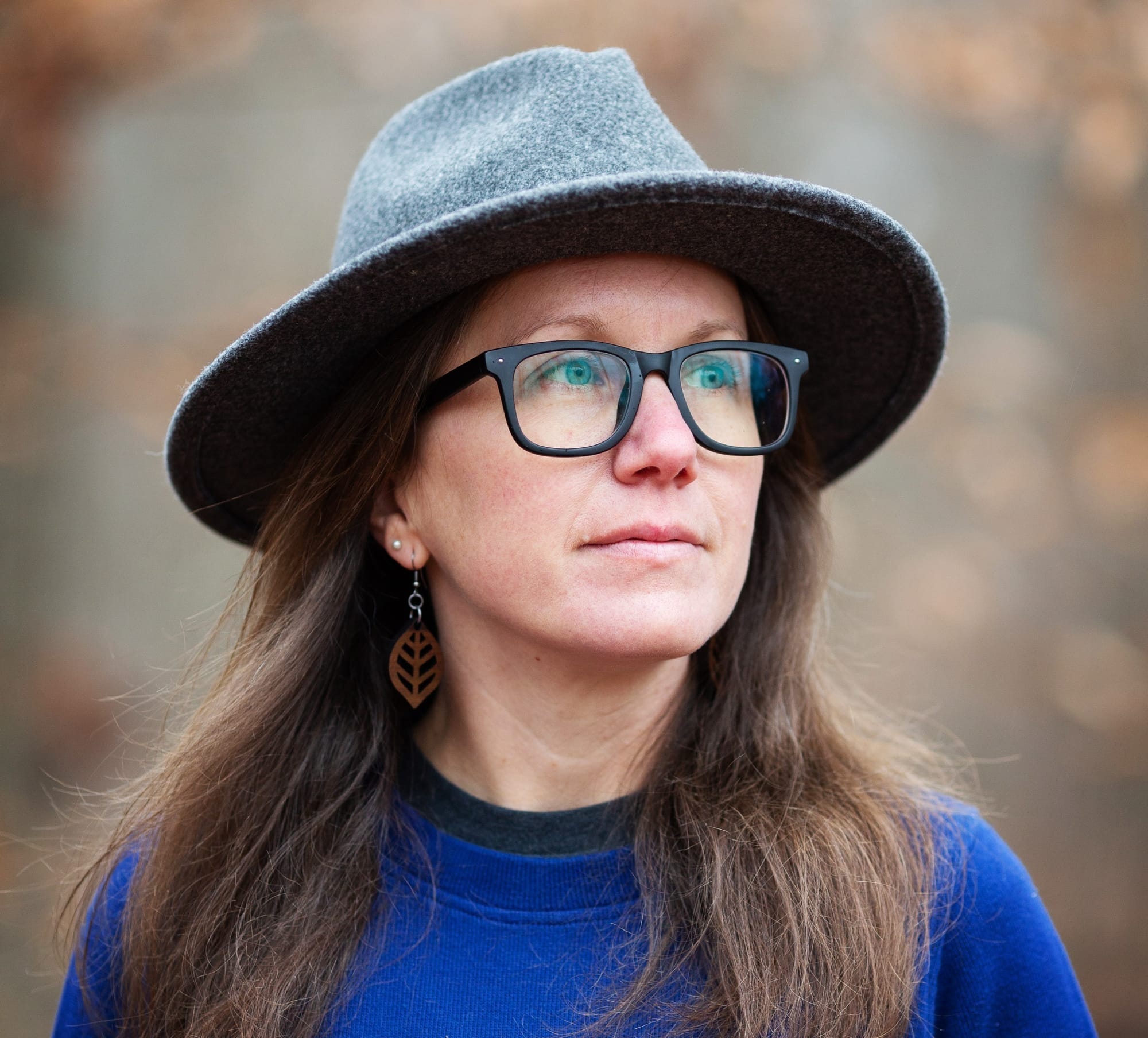
Amy Le Ann Richardson is a writer, educator, and advocate based in Carter County, Kentucky, where she lives and works on her family farm. Deeply rooted in Appalachia, her writing explores place, resilience, motherhood, and our connection to the land. She is the author of two poetry chapbooks and the full-length collection Out of Places (Pine Row Press, 2025), and the editor of the forthcoming Rooted, Resilient, Rising: Women Growing Food across the Mountains(University Press of Kentucky). Her work has appeared in Still: The Journal, Appalachian Journal, Pine Mountain Sand & Gravel, among many others. Amy holds an MFA in Creative Writing from Spalding University and has received grants from the Kentucky Foundation for Women. She leads the Bloodroot Young Writers Collective, a youth-centered literary initiative, and has been selected as one of the inaugural fellows for the National Arts Futures Fellowship, developing community-rooted creative projects that amplify voices and literary access across Appalachia.
Archive of Torn Away Places
Our county flower
blooms in limestone dust.
It changes each season –
those early ephemerals,
spring beauties and bloodroot,
then firepink, daisies,
and black-eyed Susans,
then chicory dancing along roadsides.
Unnoticed, they still blossom
shining until our flower blooms in frost
and snow covers up the gap
where mountains stood.
Talisman
I make no apologies for who I am because
it took most of my life to shed
shame shoved onto me
for poor
for Appalachian
for girl
for woman
for opinionated
for too smart for her own good
for shy
for visually impaired.
I am a mother—
I won’t pass the twisted
guts of embarrassment
on to my children.
Instead, we lean into each other
and these mountains
embraced in love
through every curve and holler,
even when some folks insist on
living in the shade.
I once packed a jar of dirt
back to Oklahoma to keep home close,
packed creek rocks in my pockets
like talisman shielding me
from the sharp sword of anger
I am tender inside
but also good at knowing when
words cast in my direction
aren’t about me at all.
Hollers of Hope
I came to know our farm in the years it rested
after abuse of growing tobacco and grazing cattle,
after generations of substance farmers
then oxycodone, and then meth
when tractors sat rusting in weeds and
tulip poplars popped up in fields,
when kids grew up, parents passed away,
it was left.
I was introduced by my husband
who wasn’t my husband yet
and had only just learned how much
he loved the land and longed to be there someday
if his dad didn’t lose it like the rest of them.
He showed me barns still smelling sweet and earthy,
grown-over paths cows once trod, a gravel road
disappearing around the bend,
and hills stretching as far as I could look.
I didn’t know then I fell for them both,
he and the farm
there on the ridge beside pawpaws and sassafras,
but I let myself lean in and get to know him,
to yearn for Kentucky while we lived in Oklahoma,
to dream of gardens and farmers’ markets,
so by the time we loved back home,
the farm felt like a fairytale,
even as I plucked needles from ditches and
closets in his grandparents’ old house,
scrubbed graffiti from the walls,
and repainted everything,
even as I helped install new wiring
and plumbing to replace all the missing copper,
patched holes and sanded floors,
even as some of his relatives
expressed their entitlement with busted windows
and cherry bombs in the brand-new mailbox.
We forged our marriage there
cleaning up years of neglect
as I learned where the hog pen used to be,
where his uncle once parked a trailer,
where the road by the hayfield leads to the parcel
his dad had to sell to pay for the divorce from his mom,
where the pole barn used to be, and the cabin
where his great-great grandfather was born
as he showed me artifacts from his childhood
and as flowers his Mamaw planted bloomed—
daffodils, tulips, and irises
highlighting the yard with color,
and then lilacs and the snowball bush,
hollyhocks, and four o’clocks—
as we found more gems like the rosebush
hidden by invasive vines and a spring so clean
you can drink straight from it
and planted gardens full of tomatoes
and beans and corn and more vegetables
than we could ever eat or put up,
determined to feed everyone who came along.
The more years I spend knowing it,
learning its history and watching it
shift with the seasons, the more I fall in love
over and over, the deeper I am rooted
around its edges, hills, valleys, and ephemeral streams,
even as someone illegally logs the white oaks or
peels away elm bark killing the trees or takes tools,
equipment, and fuel from our barns,
even those seedy parts, the weeds,
the endless work of it.
Because there are also barred owls and whippoorwills,
lightning bugs, crickets, and katydids,
fires in the yard at dusk, sunsets shimmering gold
onto trees and creeks just the same as pipelines,
crystals of frost changing the landscape moving
between seasons, snowball fights, sledding,
and spring ephemerals like a long breath
lining hollers full of stories for our children.